Talking About an Upstate Revolution: Revolutionary Schohary County. (Some of Us Had Targets on Our Backs).
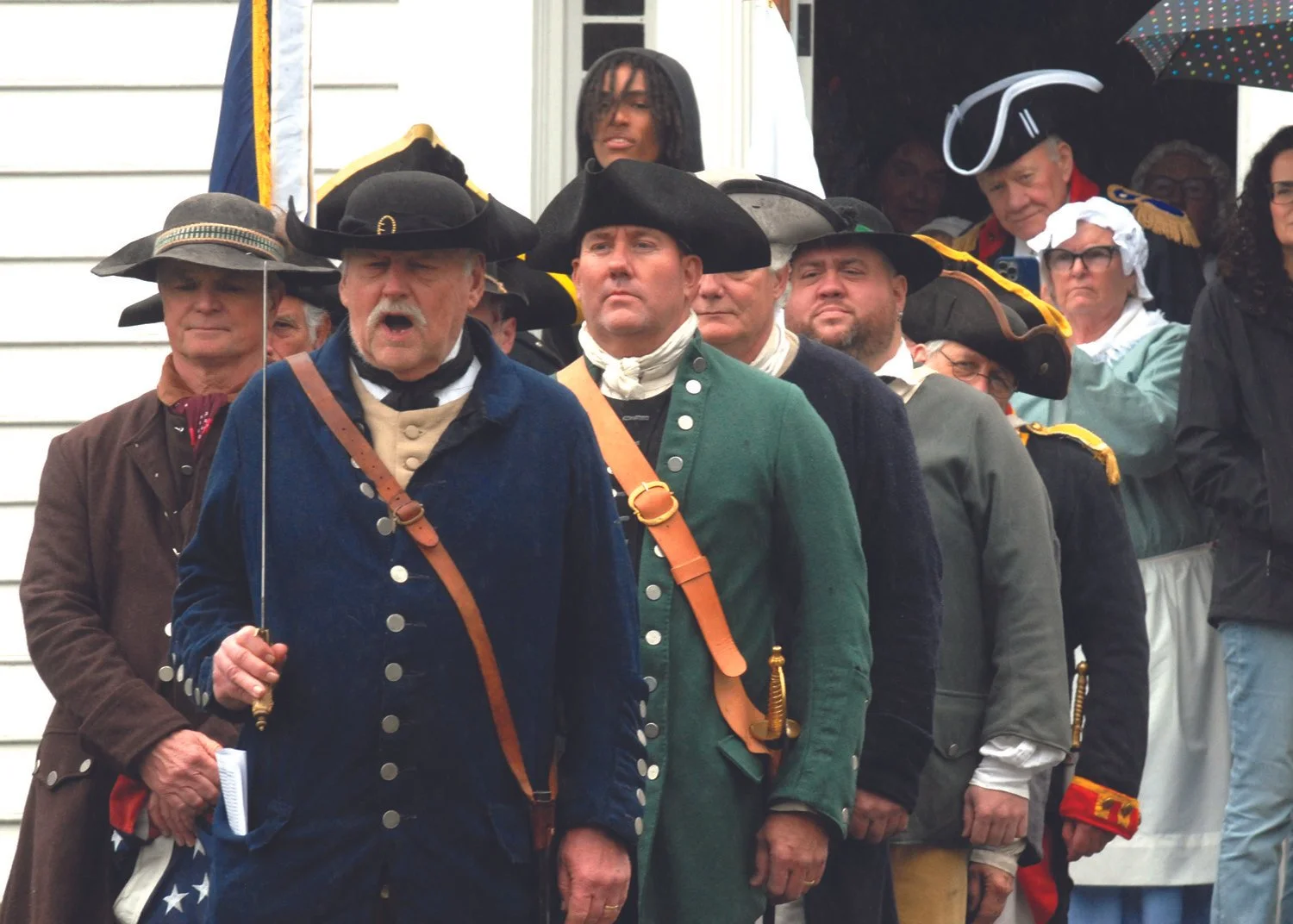
Wearing—literally—a different hat—Revolutionary Schohary County’s John Osinski (in the blue) leads a contingent of soldiers at the unveiling of a new Schoharie DAR memorial. Revolutionary Schohary County—Rev 250—is serving as a clearinghouse for events across Upstate New York marking the 250th anniversary of the American Revolution.
Happy birthday, America.
And…Schoharie County.
As the nation races toward a history-making celebration marking 250 years since we signed our Declaration of Independence, local historians, reenactors, DARs, museum staffers and Historical Societies are working to make sure Schoharie County’s role in the years leading up to–and after–July 4, 1776 aren’t forgotten.
In other words…
Who here did what for the American Revolution?
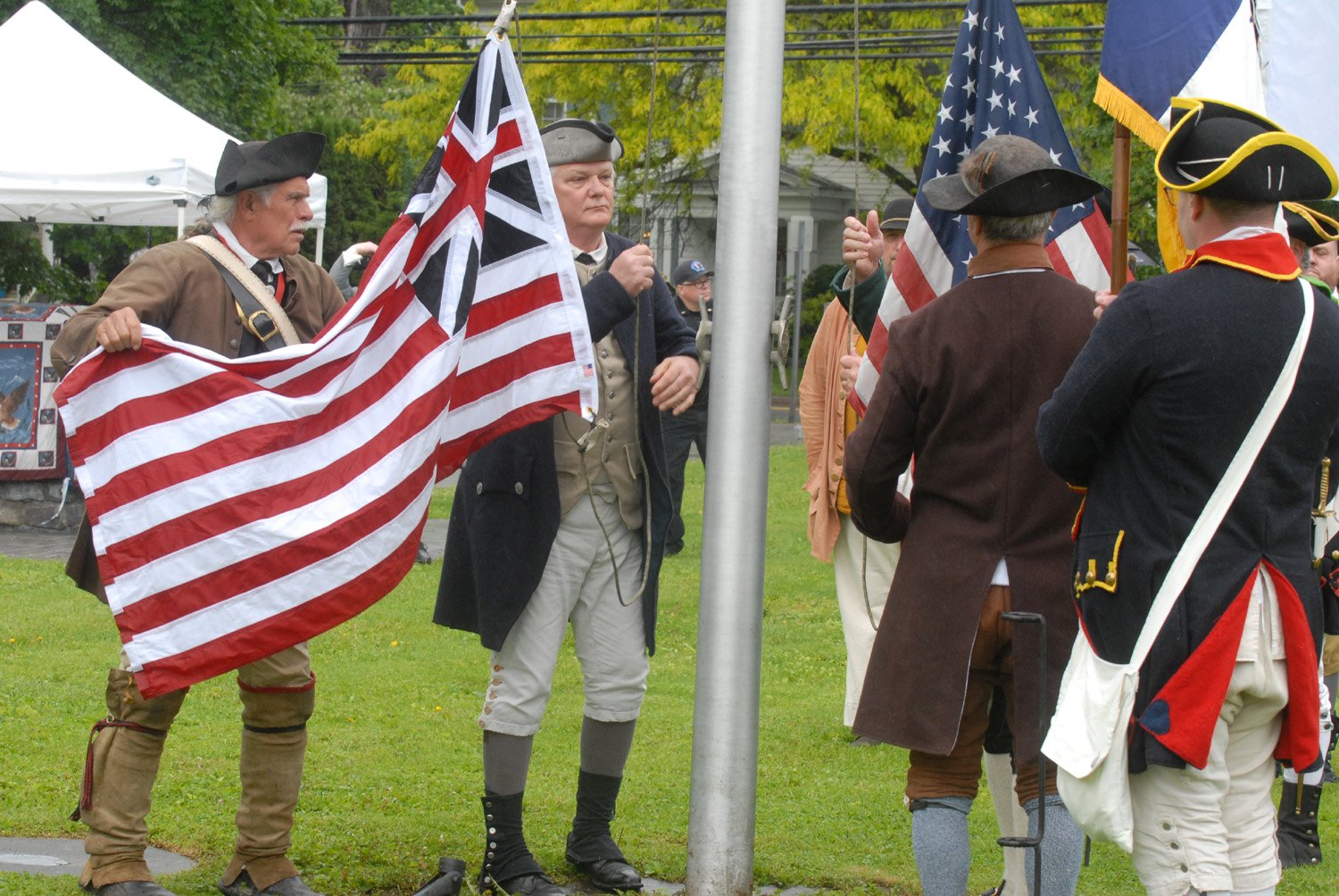
Reenactors switch out flags during a 2025 celebration at the Schoharie DAR’s Lasell Hall. This Juy 3rd the DAR will host a Remember the Ladies Tea at Lasell, one of hundreds of events across Upstate New York marking 250 years of American freedom.
Revolutionary Schohary County–Rev 250–is a grassroots clearinghouse geared toward publicizing and highlighting what happened here from 1775-1783. What really happened here.
Spoiler alert #1: Not everyone was a Patriot.
Spoiler alert #2: The real timeline for events in rural places like Schoharie, Cherry Valley and Fort Plain was different than in Saratoga, Ticonderoga, and Boston.
Spoiler alert #3: Some of the biggest villains? They’re considered heroes in places like Brant, Ontario.
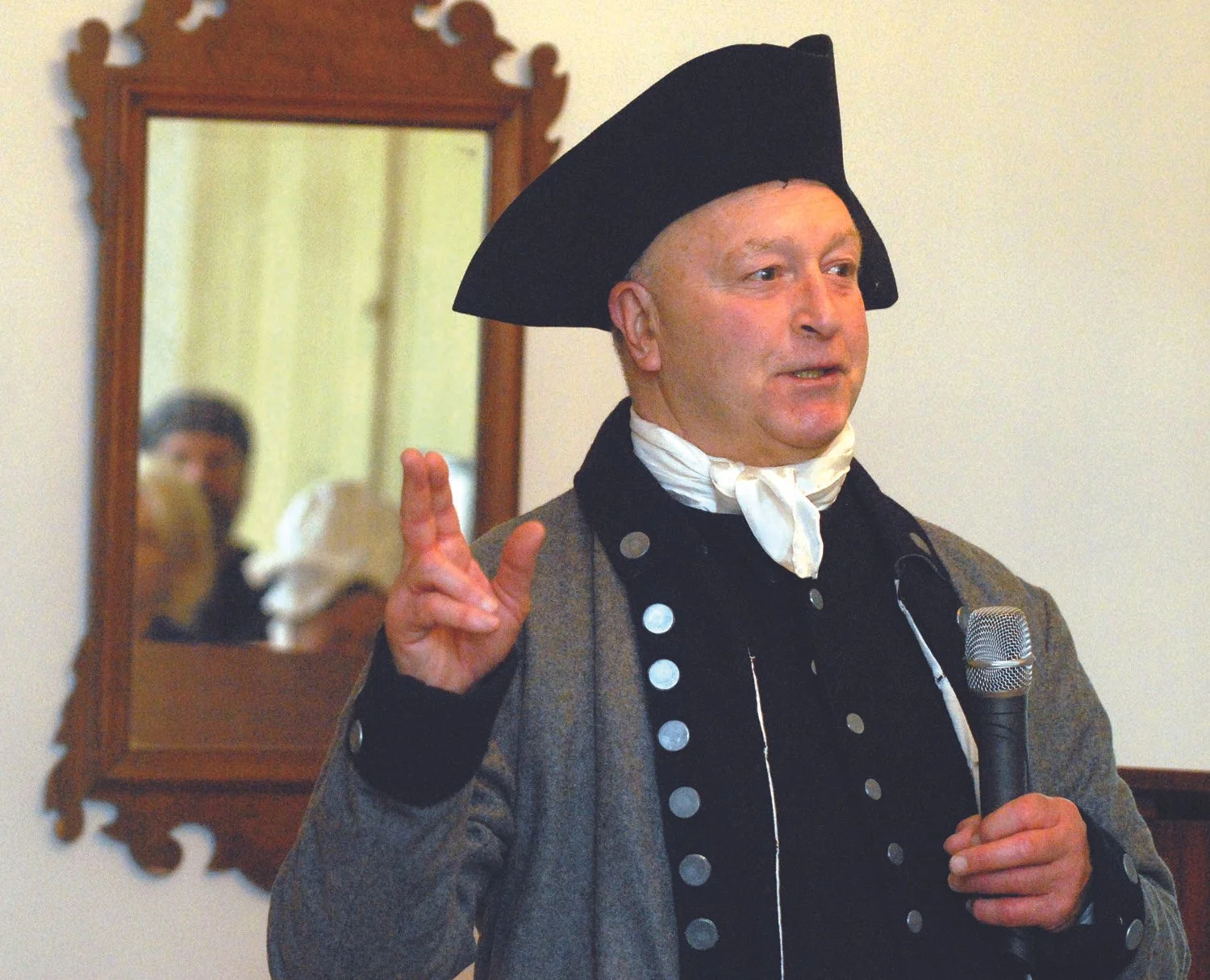
Rev 250’s Vic DiSanto is the voice behind the group’s Facebook page, a grassroots efforts highlighting Revolutionary history and events around Schoharie County and Upstate New York.
Want to learn more?
Rev 250 has both a website and a Facebook page and is stepping up efforts to share the stories of Revolutionary people and places with articles in the Times-Journal and Mountain Eagle.
The website: schohary250.org/ truly a clearinghouse with links to: the Roots of the Revolution, Historic Places, and Events. (Schohary isn’t a misspelling; it’s what we first called ourselves after we were carved from a chunk of Albany County in 1795.)
Facebook: Revolutionary Schoharie 250th Schoharie County NY (https://www.facebook.com/groups/452671290533548)/. (Ask to join). An overview of what’s going on to mark the Susquecentennial around the region–and the people doing it curated and collected by Rev 250’s Vic DiSanto.
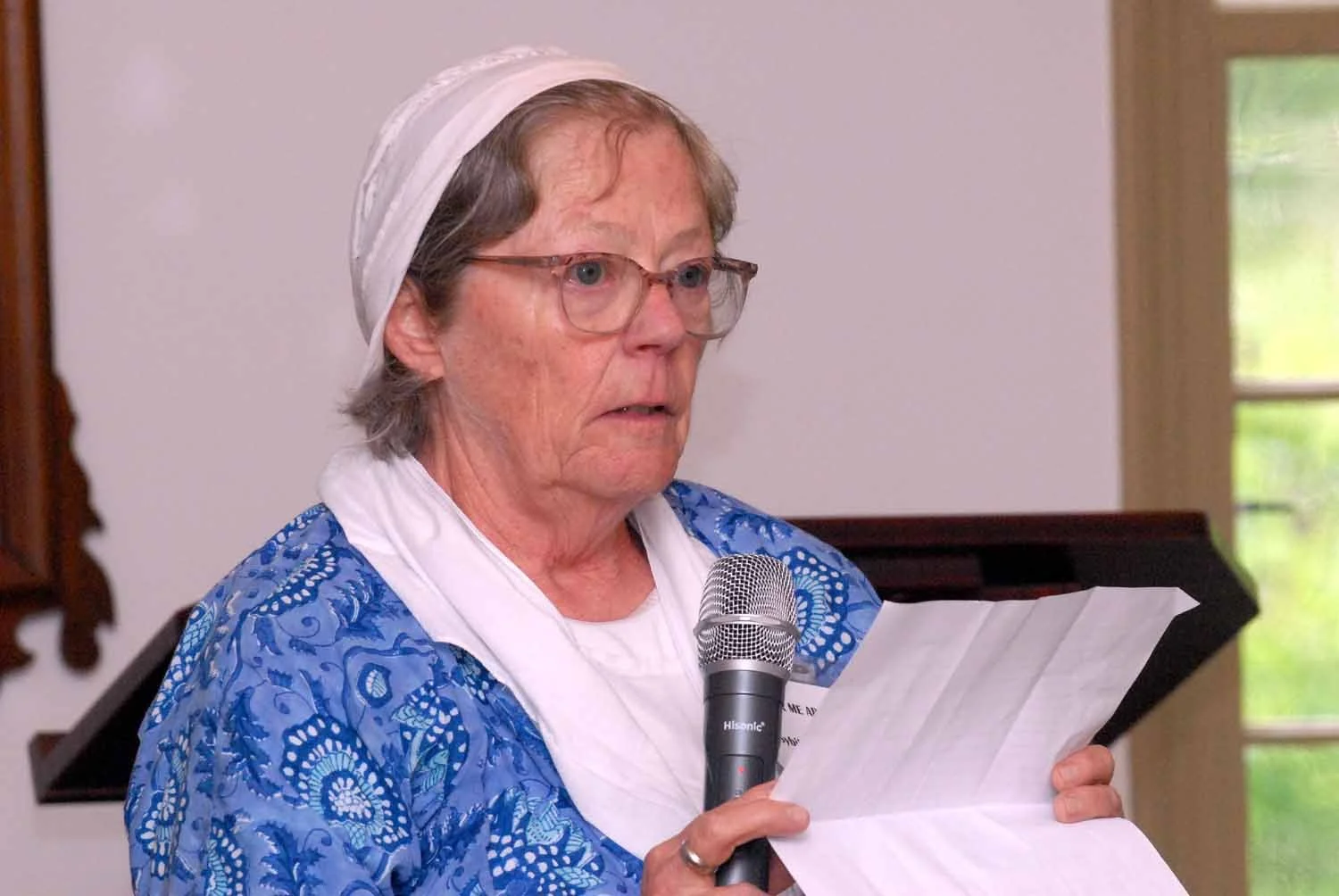
Kathy Slater, Revolutionary Schohary’s publicist and a member of the Schoharie DAR, shares the history of a local woman Patriot during a 2025 celebration at Lasell Hall. Rev 250 is serving as a clearinghouse for Upstate New York events being held this year, the 250th anniversary of the American Revolution.
Rev 250’s goal is simple, says John Osinski, who can trace his roots back to the Revolution through a handful of ancestors and who, when he changes hats, is a reenactor in the 2nd Albany County Militia.
Inspired by the crowd that turned out in Schenectady County in 2024 to witness reenactors (he was one of them) raise the first Liberty flag (remember, New York State was revolutionary before 1775), he helped organize Rev 250 shortly after that.
“The interest, it’s there. For me, that experience in Schenectady County was key. But what people today don’t understand is how ugly the Revolution was. It was nasty. It’s a civil war. There’s a lot of messy stuff going on.”
Like the Revolution, Rev 250 is grassroots.
Translation: No budget.
So the focus isn’t on hosting events, but instead, on being a resource for those who are, helping to connect the dots–and events–and sharing the stories of local Patriots–and Tories.
As a reenactor, Osinski’s interest has always been “the political side of things.” The secret meetings. (“They had targets on their backs.”) The Battle of the Flockey, when British troops marched on the Schoharie Valley, burning the forts. George Mann–who stood with the King. The Vromans. The Cryslers.
“Schoharie County has a very unique history. It wasn’t all ra-ra-ra. A third were for the revolution, a third were against it, and a third were neutral. The fact that they pulled it off…everything says it shouldn’t have happened. The history…is it all good? No. But understanding it–with no sugar coating it–helps us understand where we are today.”
Kathy Slater, also with Rev 250 and a member of the Schoharie Chapter DAR, is in charge of PR, sharing those stories through profiles in the Times-Journal and Mountain Eagle, documenting them before they’re lost.
Also, that uncomfortable facts-matter thing.
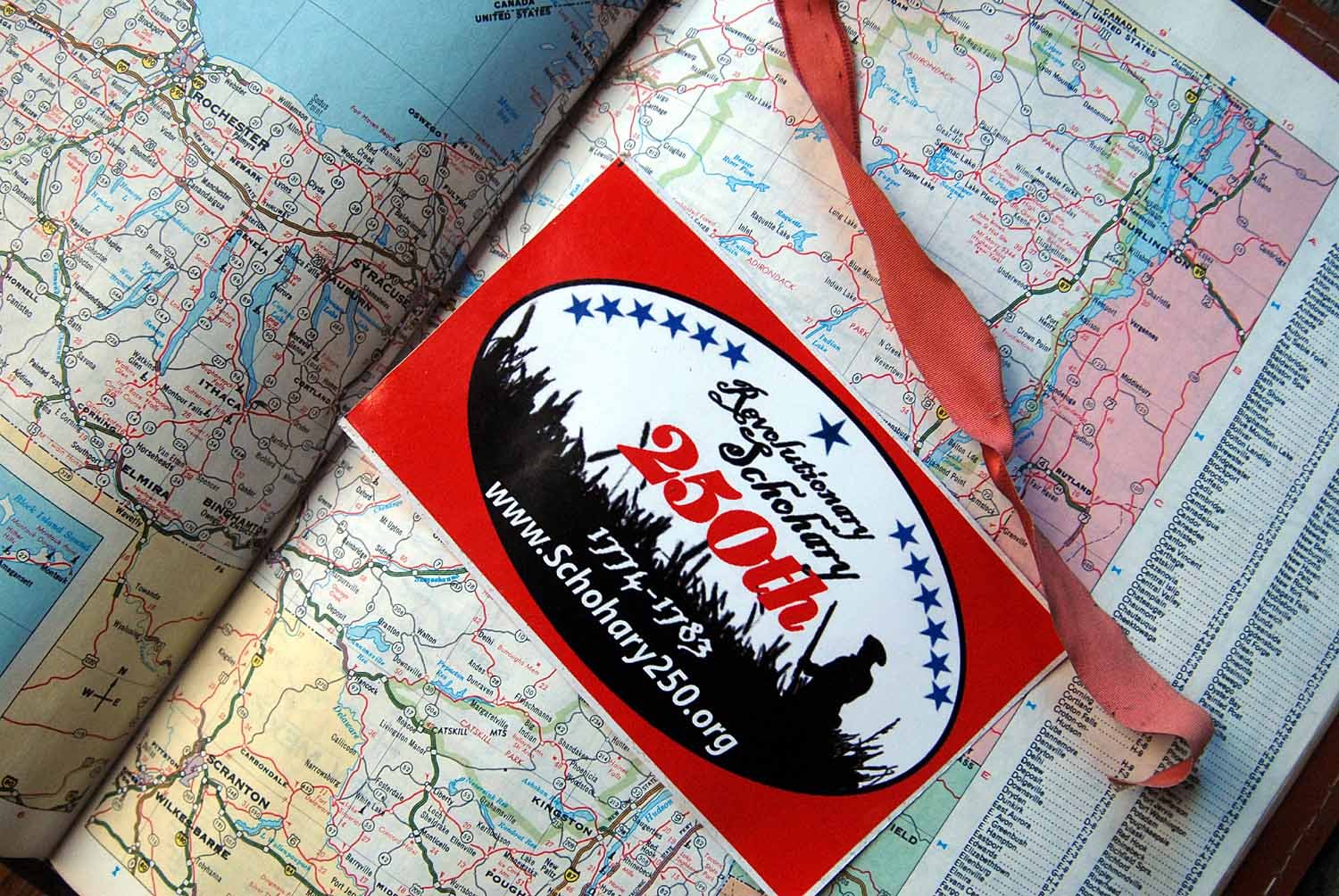
Revolutionary Schohary (Schohary is what Schoharie used to be called) is a grassroots effort highlighting efforts across Upstate New York celebrating the 250th anniversary of the American Revolution. Personalities? Walking Tours? Talks? Teas? Rev 250 is the go-to place to learn more. Schohary250.org/
“From a genealogical perspective, we may have skewed opinions of who our ancestors were.”
The stuff we didn’t get in school–or maybe, as far as day-to-day life in Schoharie County went, got not quite right. Like the stories of local families divided by politics. Loyalists and Patriots under the same roof; the side you chose as often a matter of a paycheck as politics. Documented before it’s lost under the weight of all the history that’s come after as time inevitably marches on .
Rev 250’s efforts will continue beyond 2026, hopefully staying in the picture until the sesquicentennial of the Treaty of Paris, which officially ended the Revolution–September 3, 1783–and officially recognized the 13 Colonies.
“It was more than just 1775 or 1776,” Osinski says
Indeed it was.
In many ways, the Revolution was just the start.
“If you don’t know your history, you’ll repeat it. We don’t want to repeat it.”