The Story Behind The Revolution: Another Look at America’s 250th
Iroquois Museum's Talkin’ Bout A Revolution: A Haudenosaunee Response to the 250th shares the stories we never heard. Because history is complicated.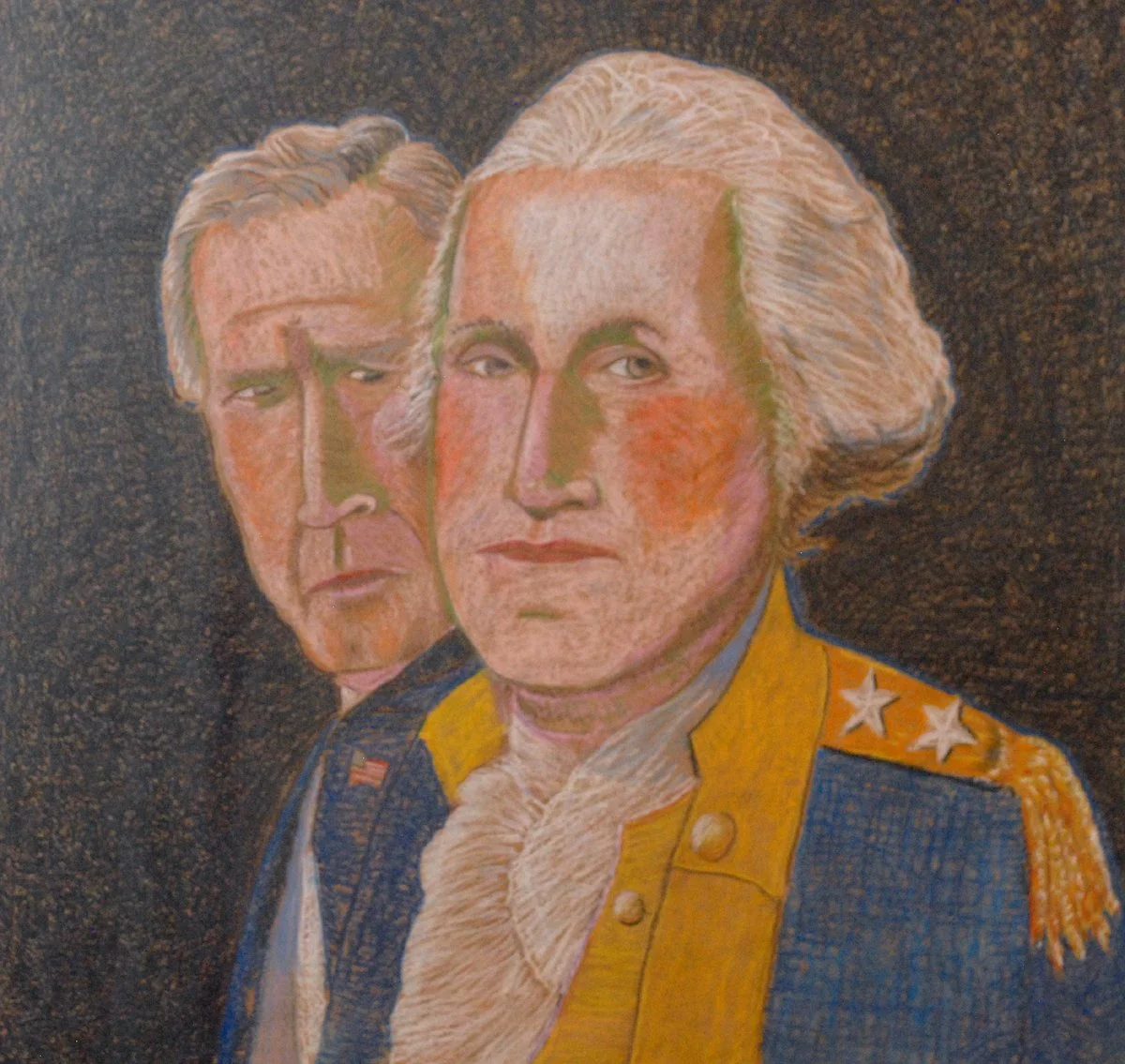
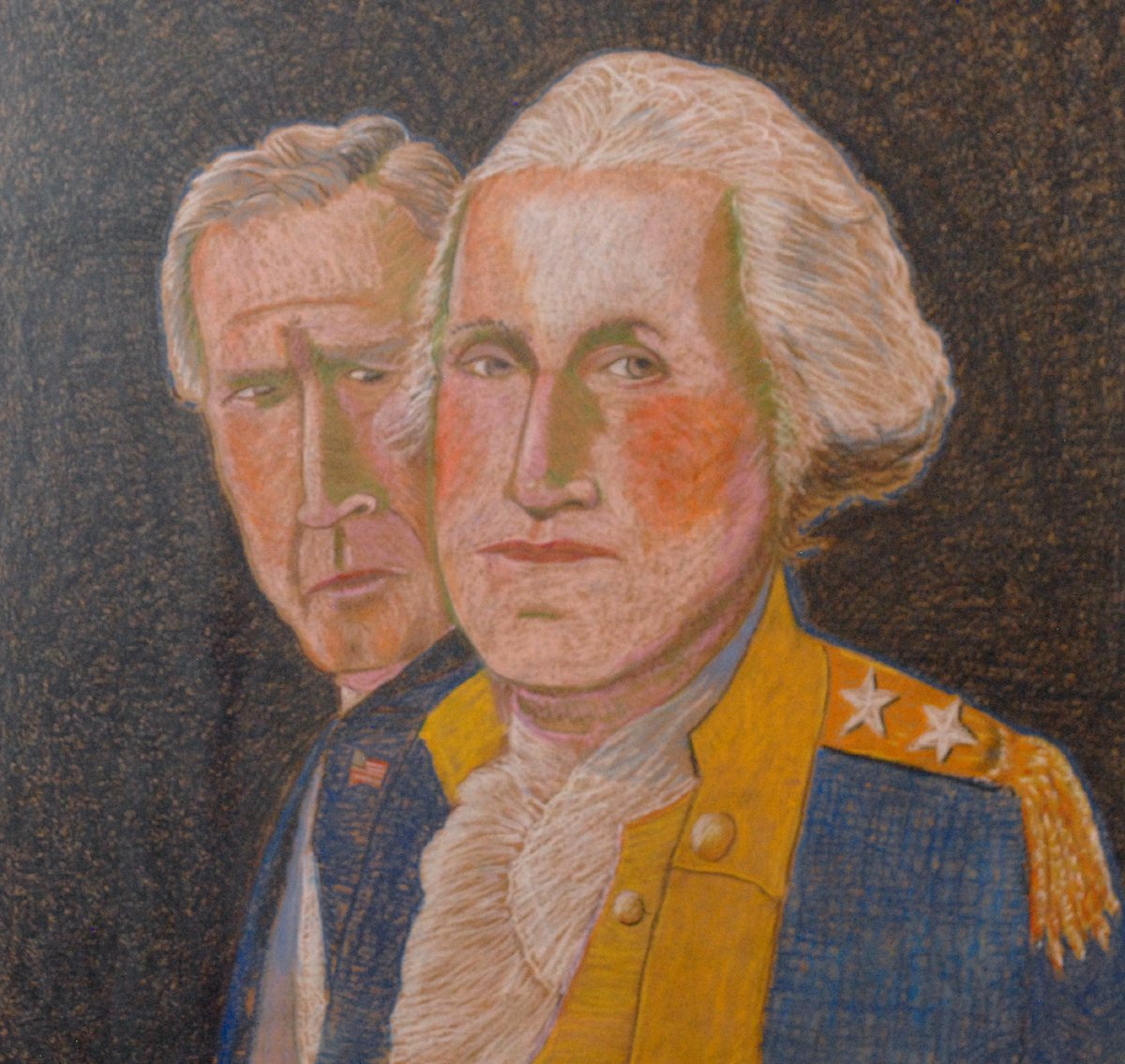
“Two Georges, 2010”, one of the featured works in the Iroquois Museum’s Talkin’ Bout A Revolution: A Haudenosaunee Response to the 250th.
If you’ve forgotten more than you learned about what-all led up to signing of the Declaration of Independence on this, its 250th anniversary, what about the stories you never heard?
And what can they tell us about history? Healing? Hope?
Those are the questions asked and answered by more than a dozen Haundenosaunee artists, sometimes with divergent views, in Talkin’ Bout A Revolution: A Haudenosaunee Response to the 250th, now on exhibit at the Iroquois Museum in Howes Cave.
Schoharie County, New York, sits on the traditional homelands of the Mohawk Nation, one of the Six Nations of the Haudenosaunee Confederacy.
The region, from a native word meaning "driftwood," features deep indigenous roots alongside a rich post-colonial history.
Located on the ancestral lands of the Kanienkehá:ka (Mohawk), the Iroquois Indian Museum honors all six Haudenosauneenations–Mohawk, Oneida, Onondaga, Cayuga, Seneca, and Tuscarora–through arts, history, and land-based education.
Through insightful, thought-provoking pieces–among them quilts, sculptures, beadwork, and multi-media exhibits–Talkin’ Bout A Revolution goes beyond battle reenactments and parades to explore the American Revolution’s impact on the Haundenosaunee Confederacy, splintered when the Six Nations lined up behind opposite sides of the revolt.
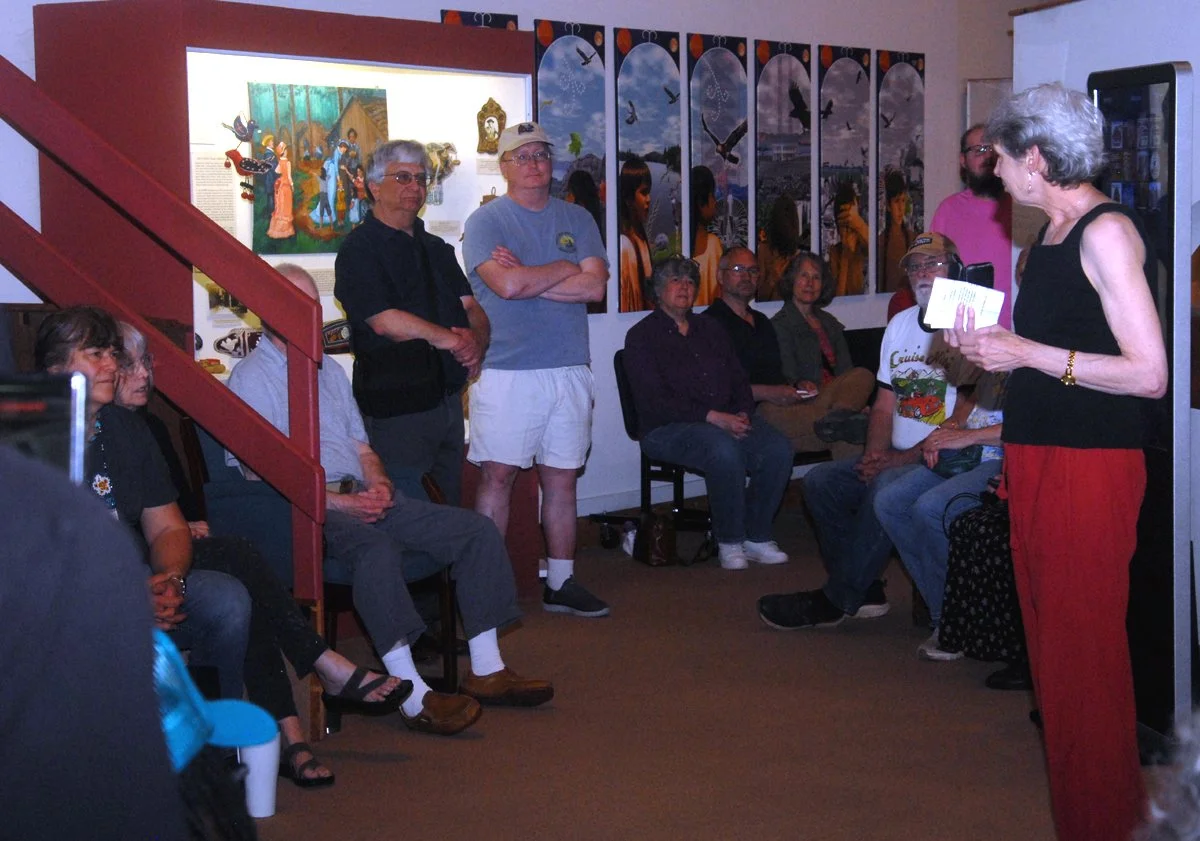
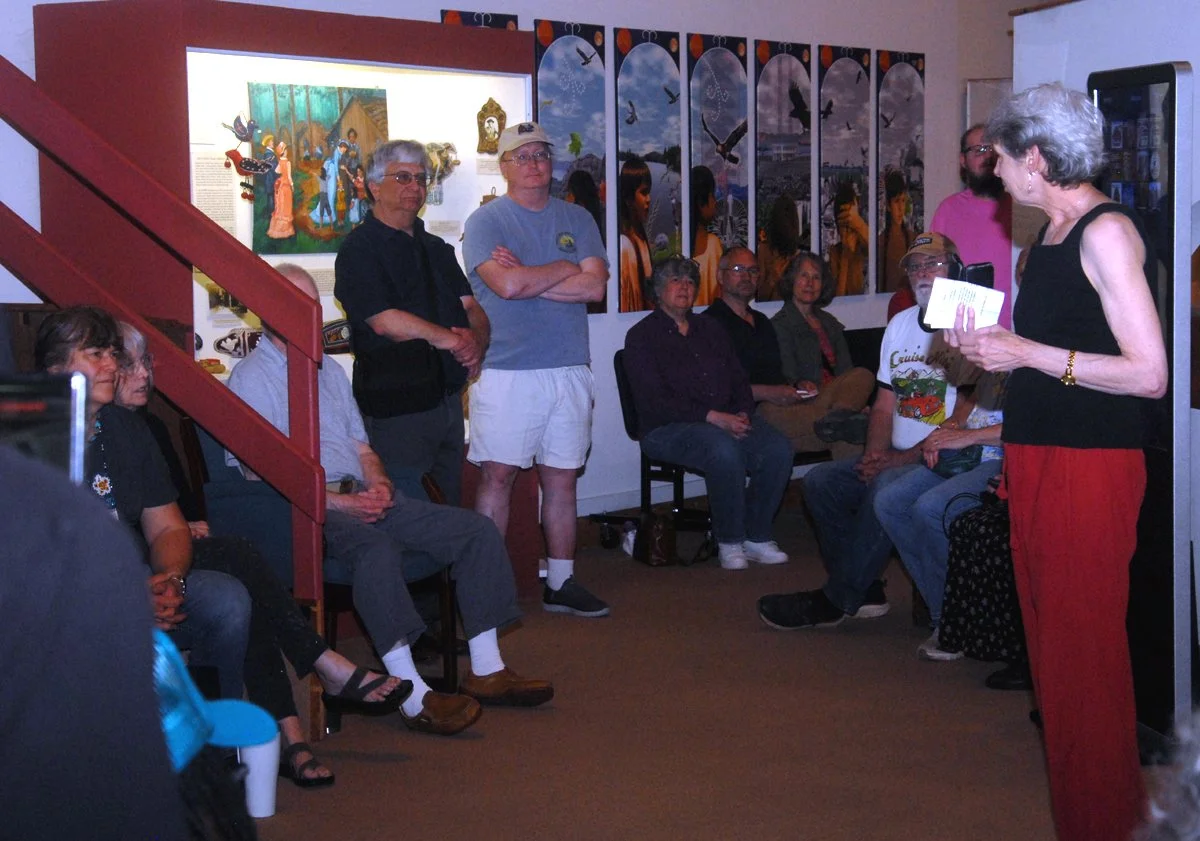
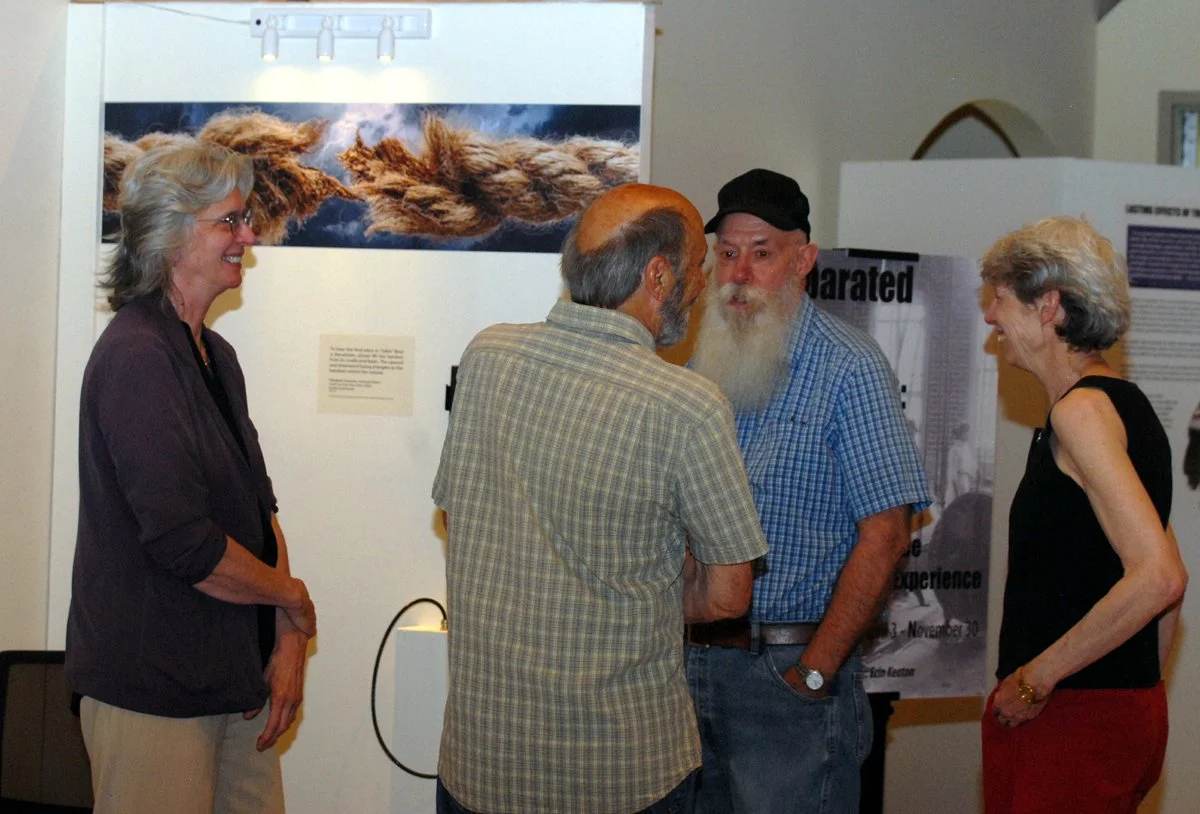
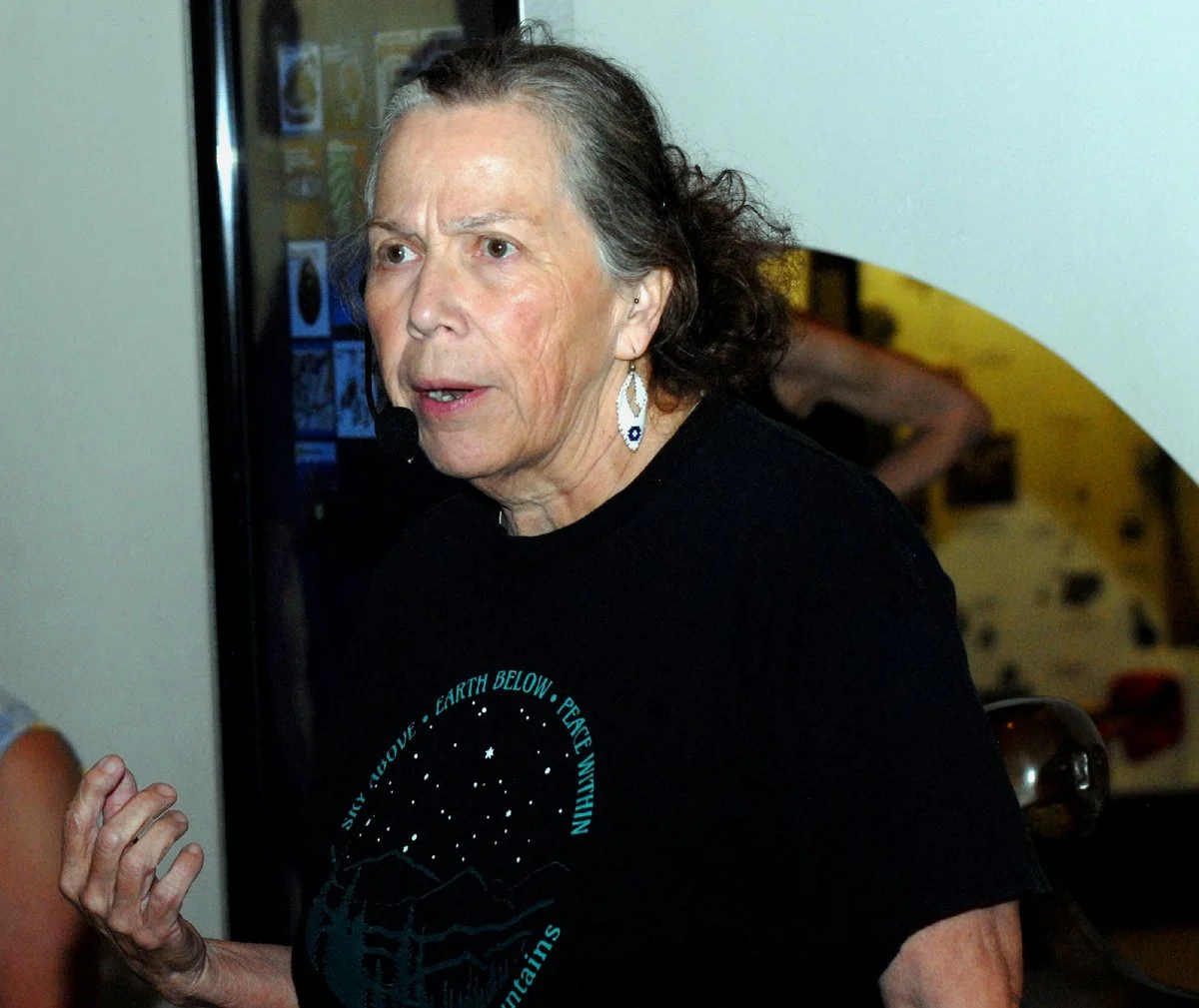
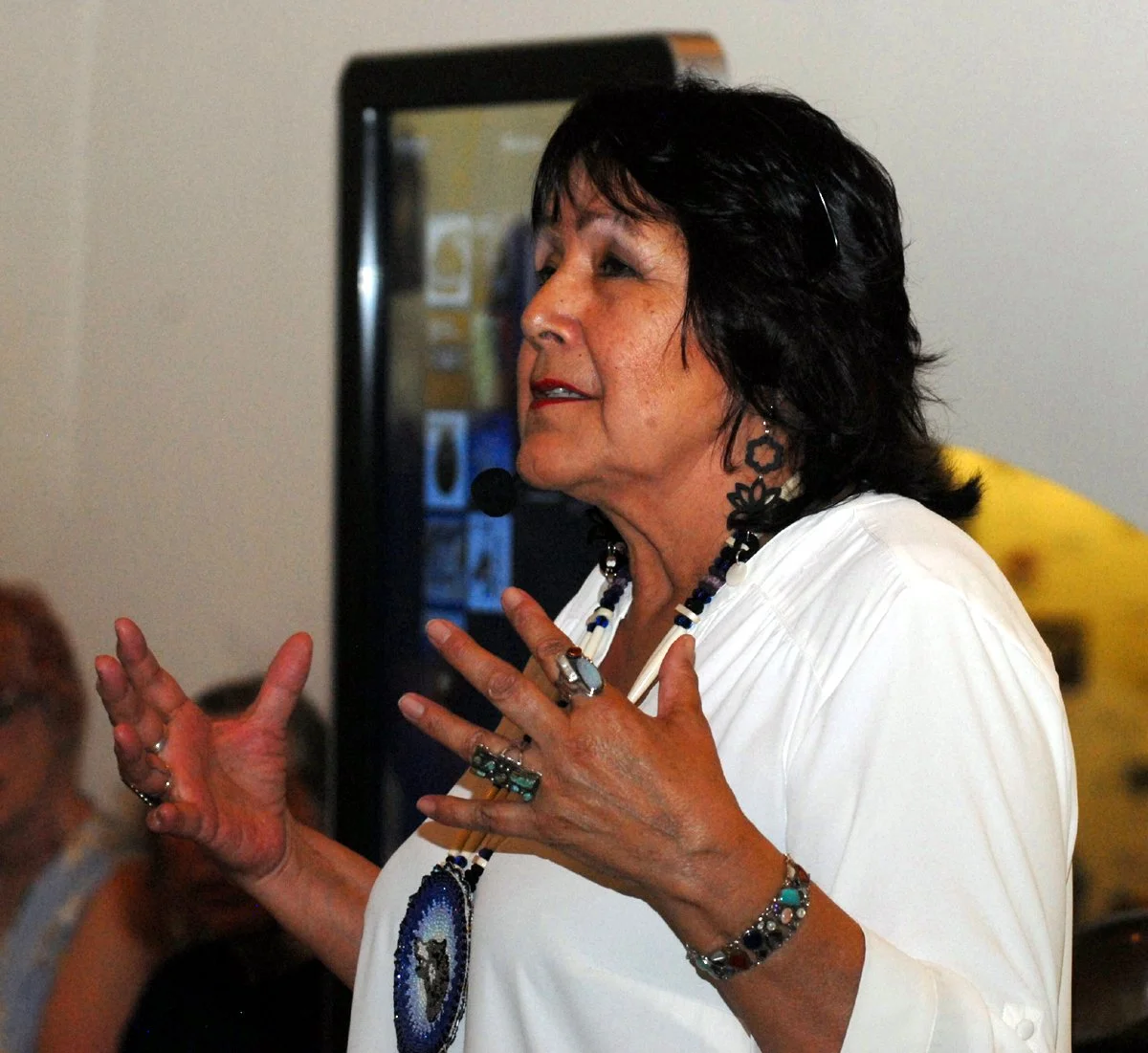
Colette Lemmon, who put together Talkin’ Bout A Revolution: A Haudenosaunee Response to the 250th, shares the exhibition’s background at an opening reception.
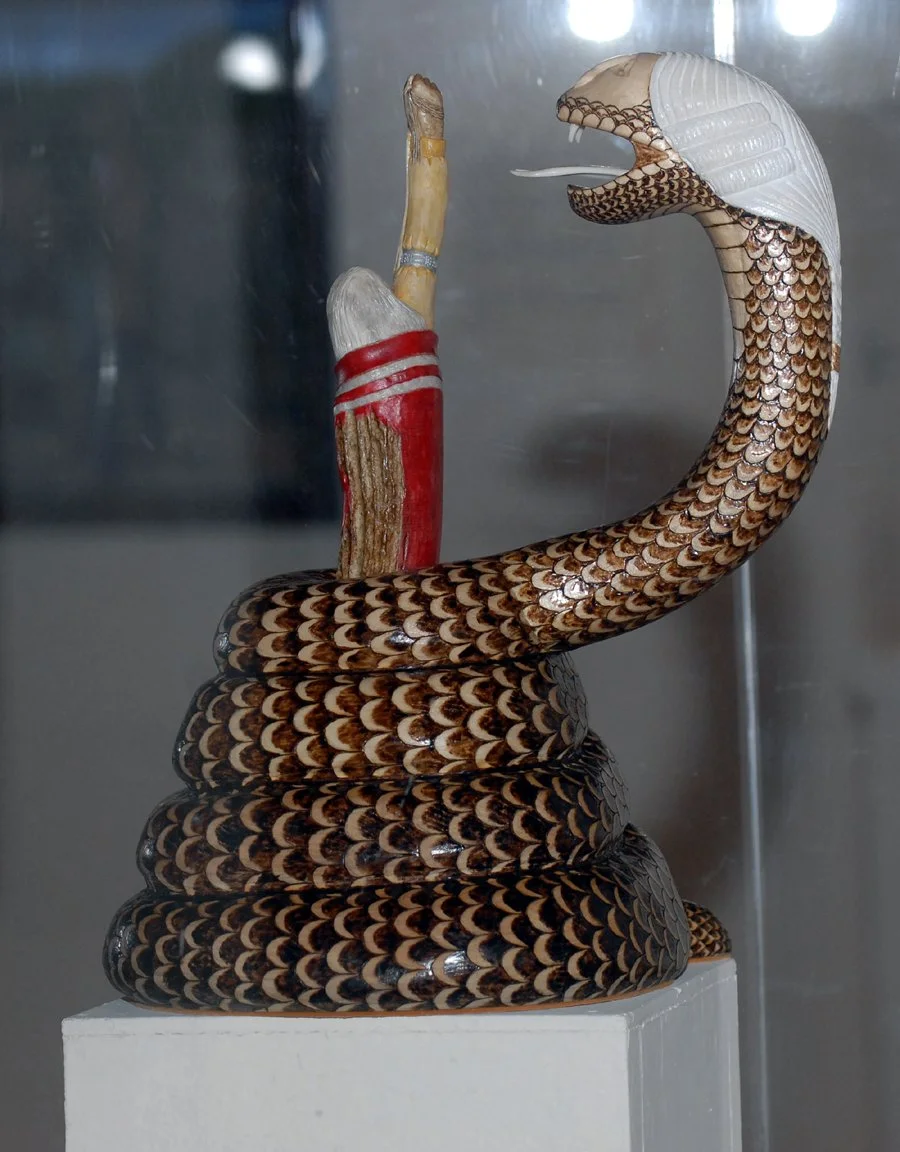
Artist Diane Schenandoah’s (Oneida Nation-Oneida) sculpture, “Now is the time for Peace,” represents the principles of the Haudenosaunee Confederacy.
Because history, it turns out, it’s complicated.
It’s not all Hamilton.
“It’s hard to understand Washington's scorched-earth policy. He was living with native people,” said Christina Johannsen Hanks, Museum founder and today, president of its Board of Trustees.
Hanks was speaking in front of Seneca Nation artist G. Peter Jemison’s “Two Georges, 2010” at the exhibition’s opening reception. A standing-room-only crowd.
Colette Lemmon, longtime Curator of Exhibitions (now retired, but still a consultant) began work on the exhibition last summer, when the fact that the museum doesn’t get state or federal funding became, for once, a win.
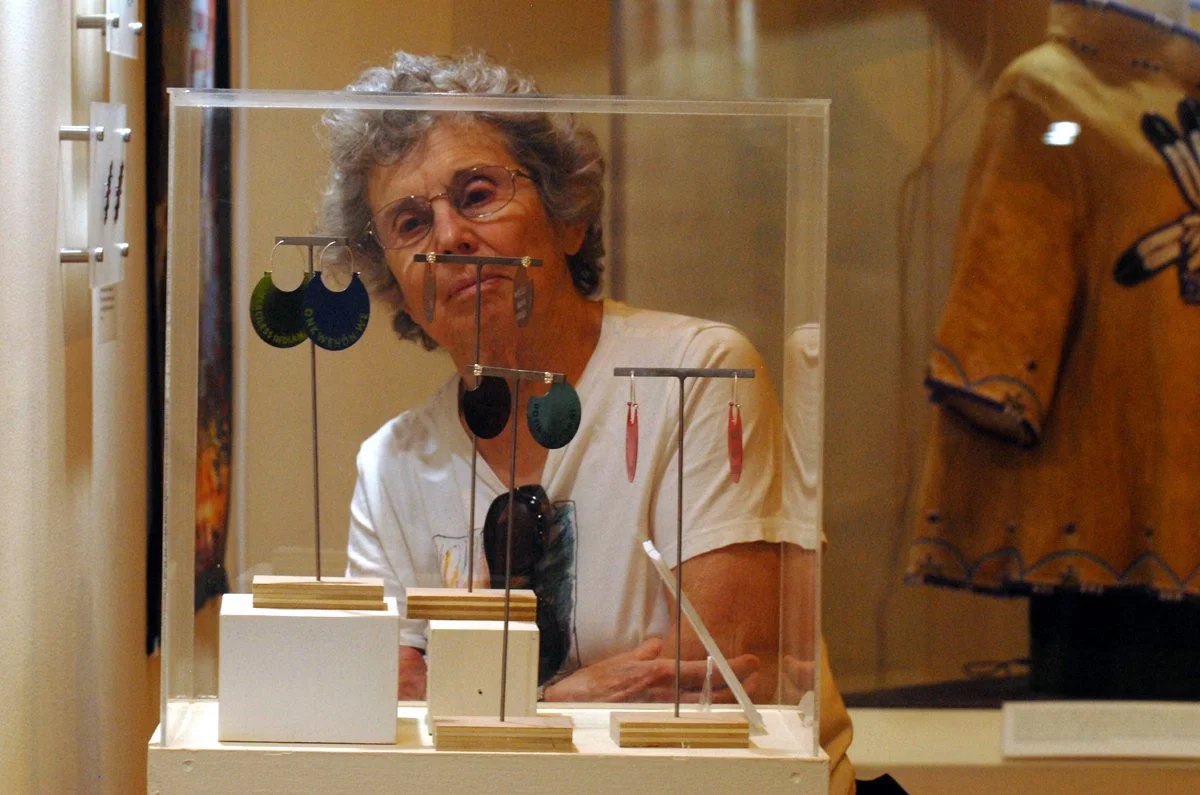
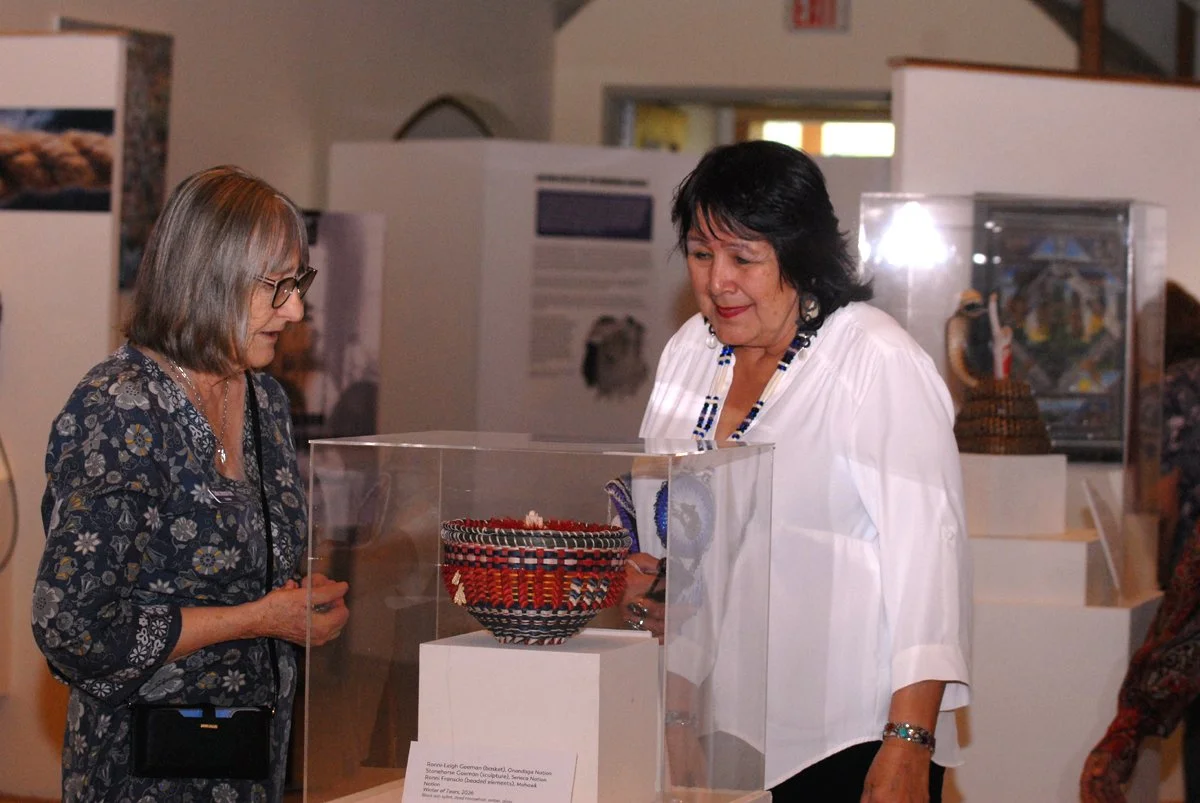
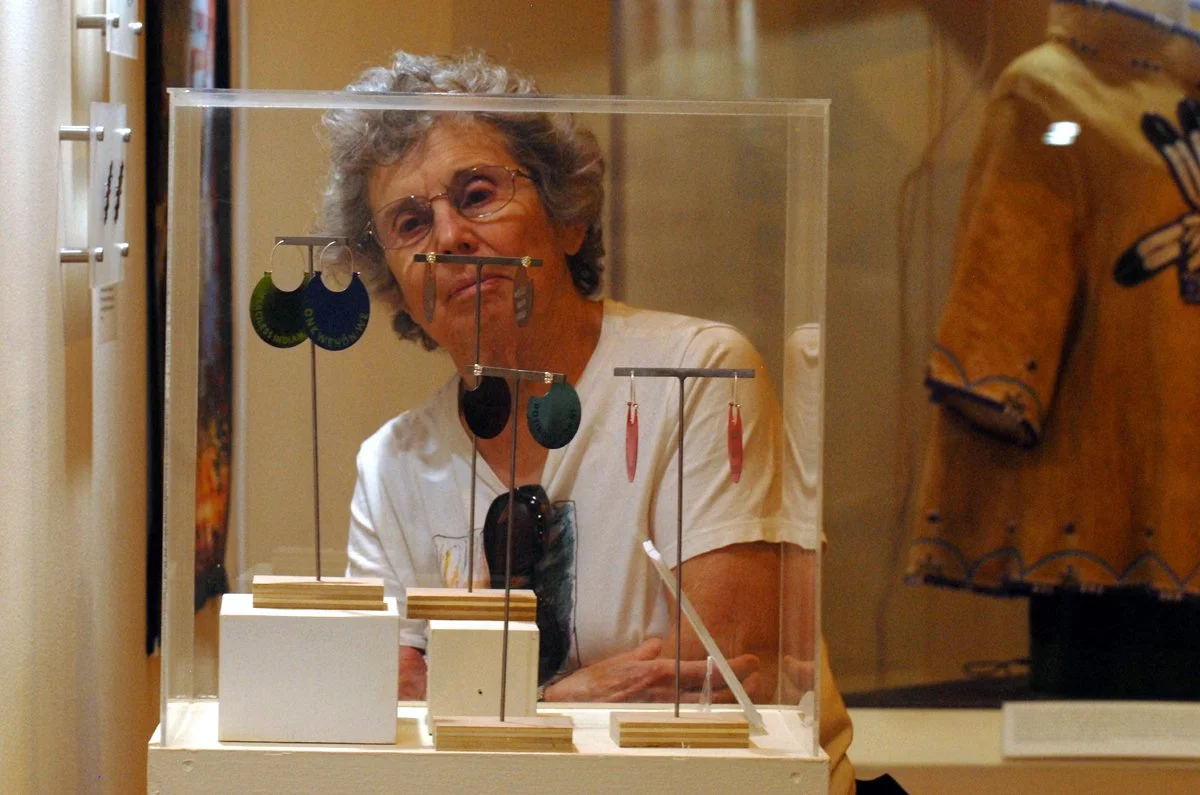
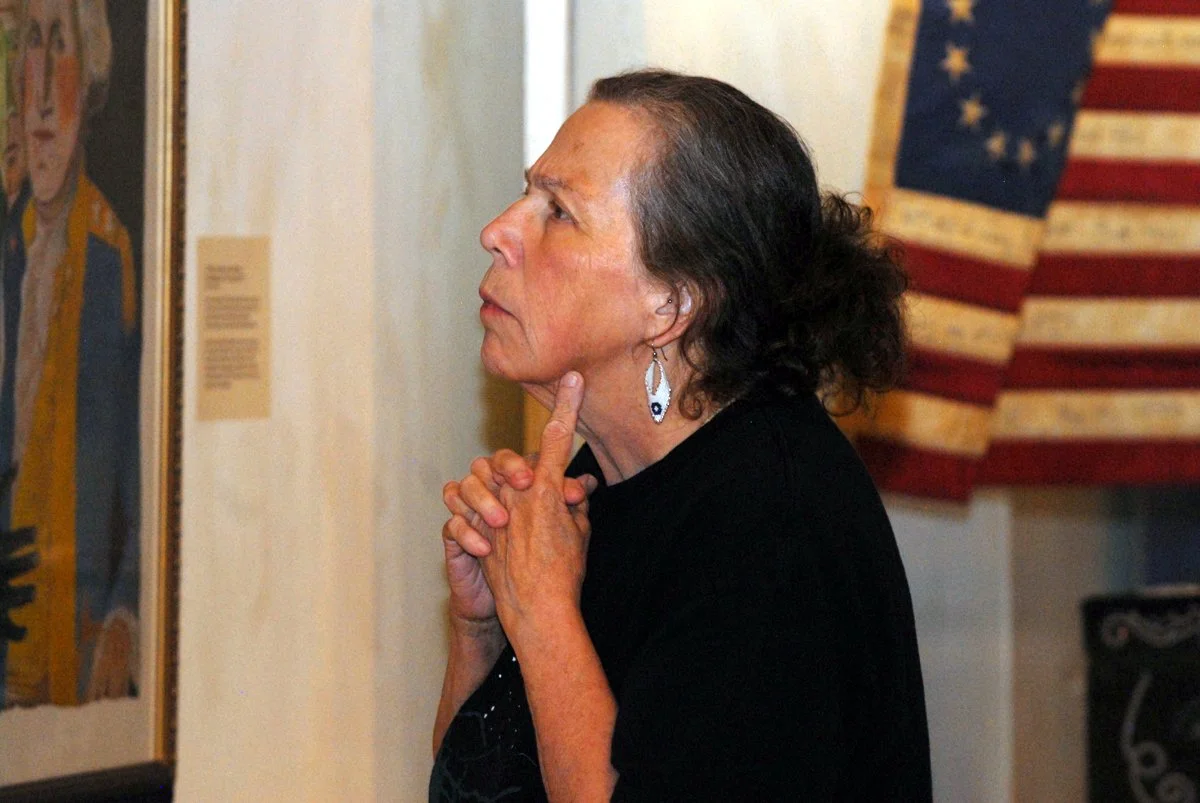
Sue Spivack takes a closer look at one of the exhibit’s pieces.
Unbeholden, they were able to control the narrative, said Hanks. They used that freedom to let the Haudenosaunee artists tell their own story. And they were overwhelmed by the response.
“With all the press the 250th was getting, we started asking what our role was in keeping with our mission,” Lemmon said.
“More and more museums were getting pressured to tell a different kind of story. We decided our place, as an independent non-profit, was to say some of the things others couldn’t.”
They got it. With pieces that address not only historic events, but “underscore the ideals and realities of Equality, Democracy, and Autonomy”:
The Spark.
Other themes:
Revolution!...the, turns out, not unfounded concern that the colonists, newly-empowered by the Revolution, would take Indigenous lives and possession of their land.
A Rock and a Hard Place…attempts to remain neutral were short-lived; decisions pitted family against family and nation against nation
Reverberations…still being felt in Haudenosaunee communities today. “...irrefutable truths that refuse to be forgotten, diluted or rewritten to fit a conventional narrative.” Compelling voices that invite new conversation around our intersecting histories.
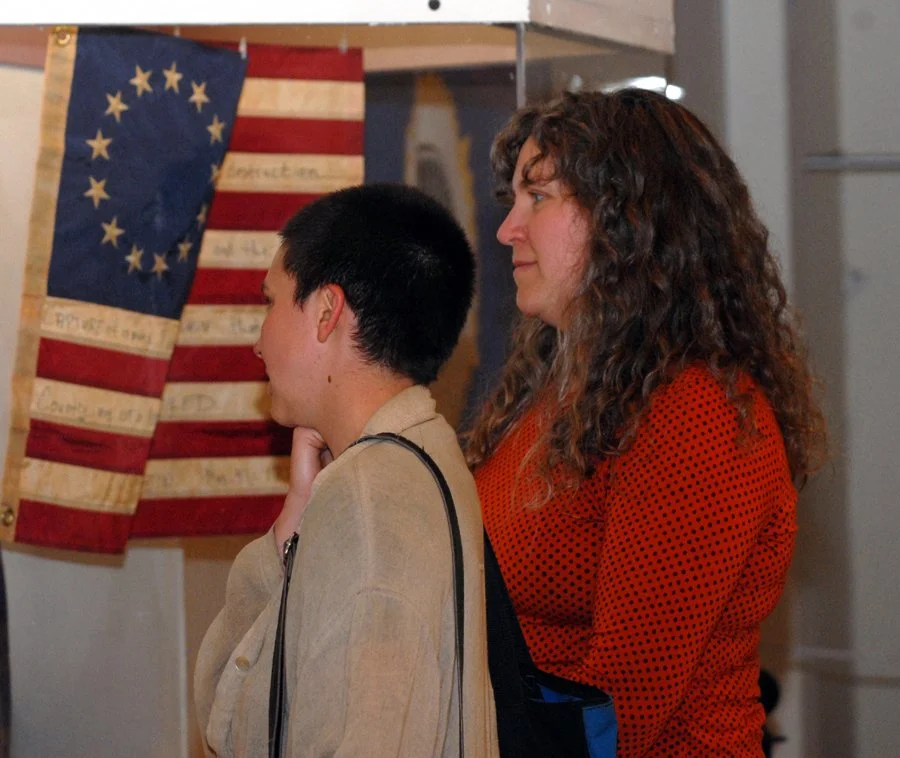
No state or federal funding gave the Iroquois Museum freedom to explore the real stories of the American Revolution.
But…
“This is not the response of all people, but the expressions of individuals,” said Lemmon.
“Artists come at things from a lot of different perspectives.”
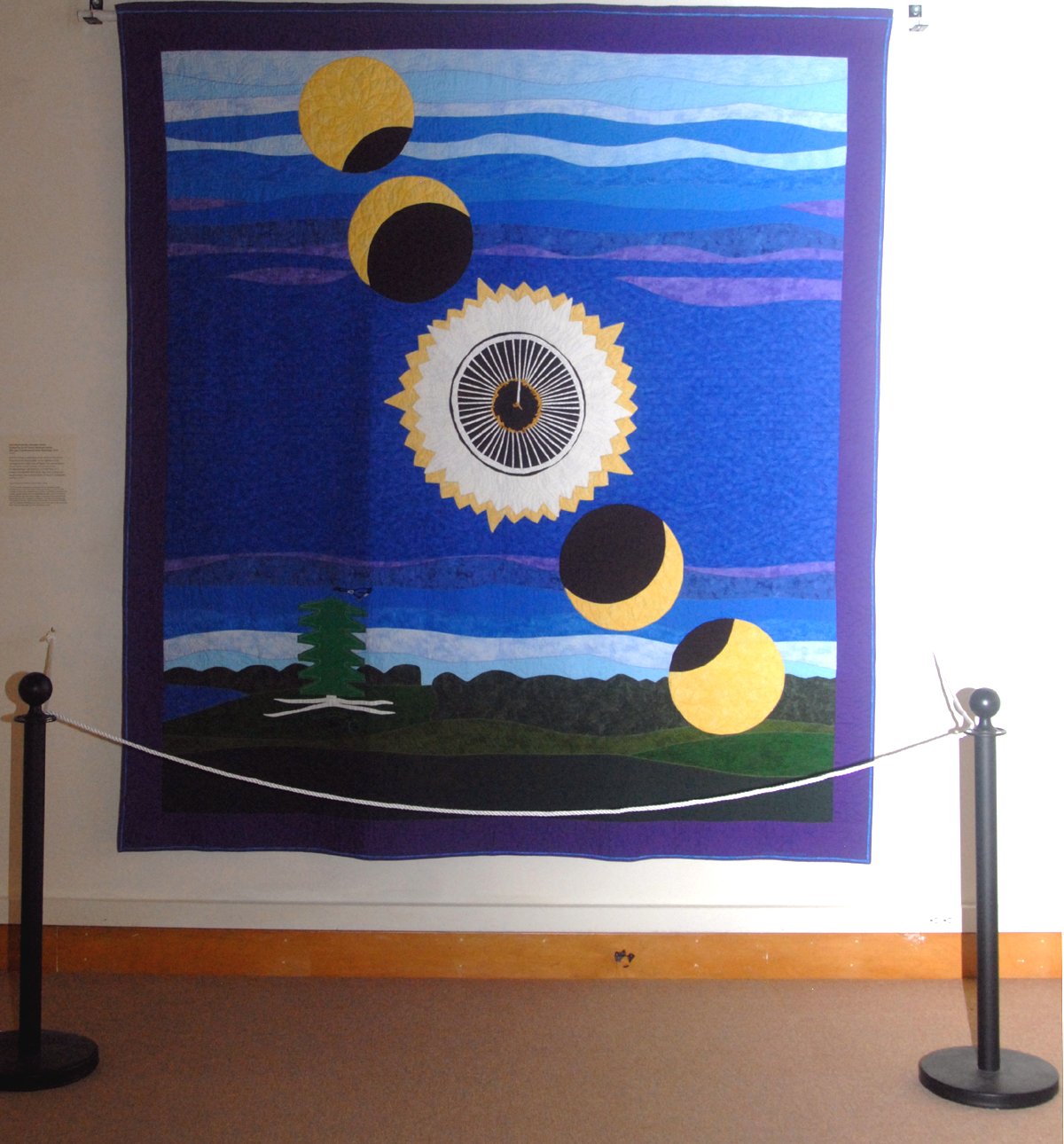
Artist Iakonikonriiosta (Mohawk Nation-Akwesanse), whose quilt “Sken:Nen Tsiotensawe: A New Beginning” traces the path of a total eclipse across Haudenosaunee territory not in 2024, but 1,000 years ago, is hopeful that out of chaos comes order.
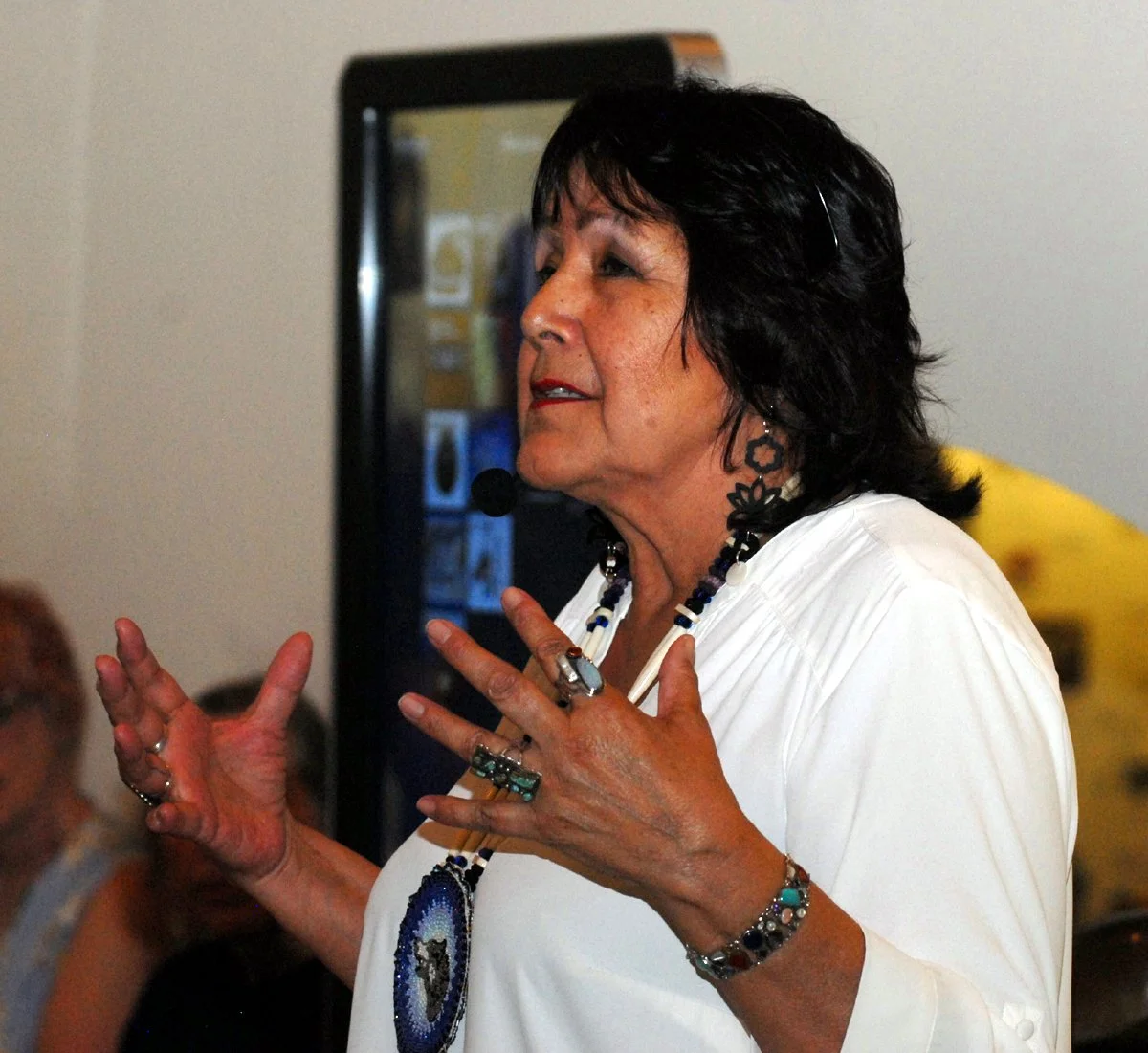
Iakonikonriiosta was one of the artists on hand for a Q&A at the opening reception.
“We continue our traditions. Things are a cycle. We have to hope that out of this chaos will come order.” Even the Confederacy structure was complicated. “Peace wasn’t overnight. The form of government going on needs a lot of tweaking, but I’ve met so many good people. We have a chance.”
The mother of 10, she also sees hope in her 28 grandchildren.
“Every generation's smarter. The things they’re trying will make things better…”
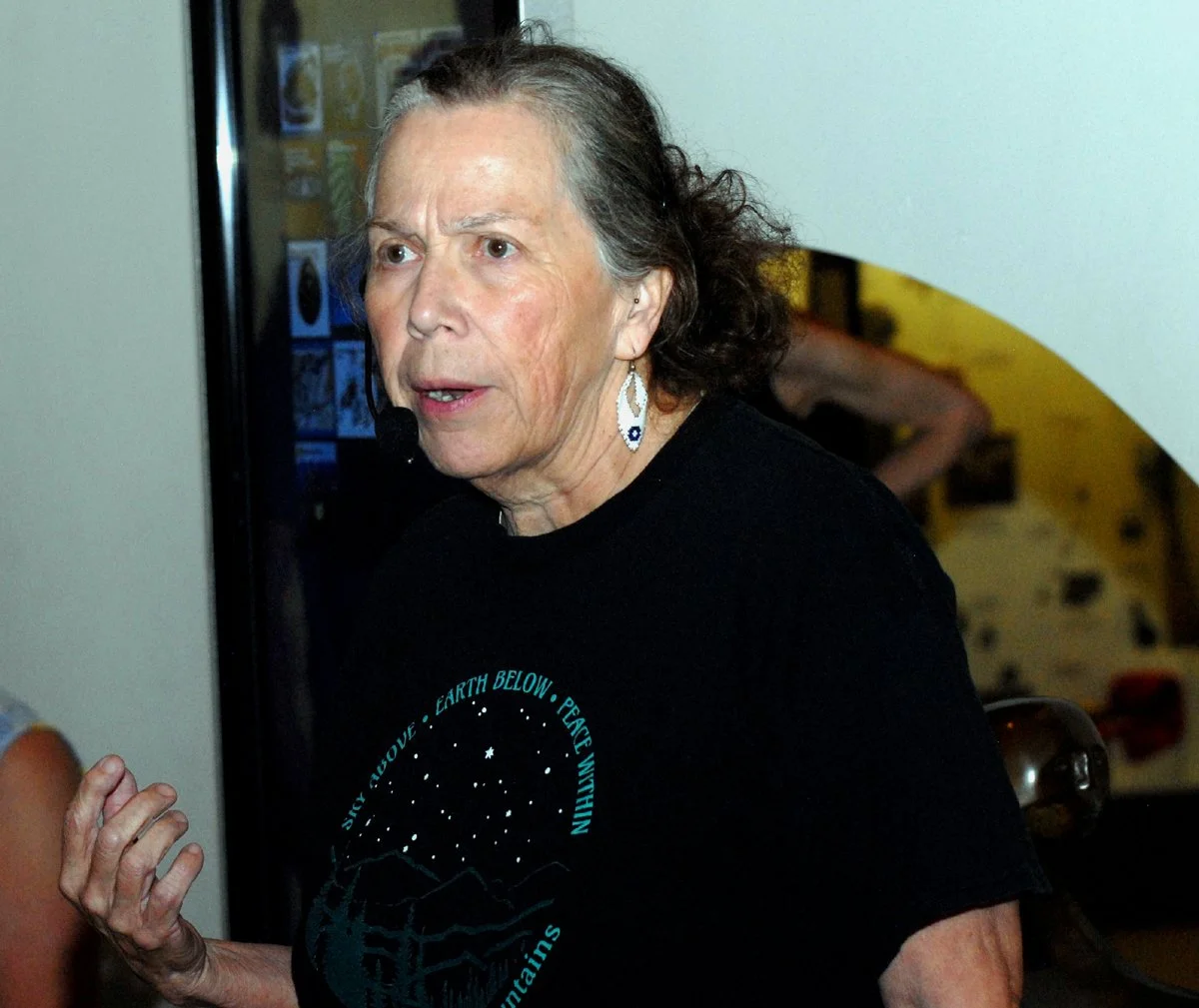
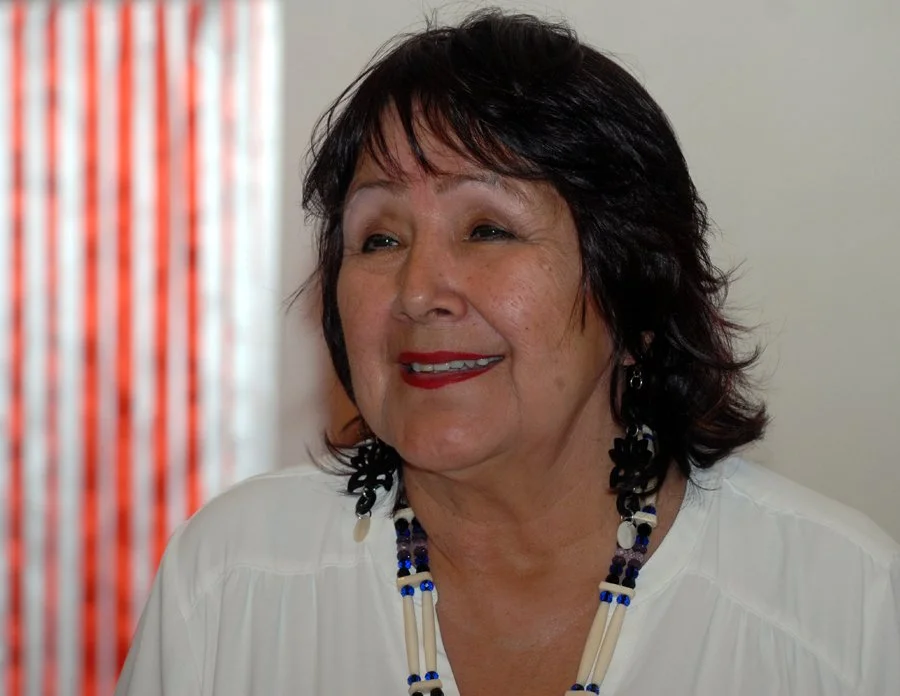
Artist Iakonikonriiosta (Mohawk Nation-Akwesanse) is hopeful that out of chaos comes order.
Artist Diane Schenandoah’s (Oneida Nation-Oneida) sculpture, “Now is the time for Peace,” represents the principles of the Haudenosaunee Confederacy. Carved from a caribou antler and then cast in bronze, it too looks toward peace.
“Our Great Laws tell us we are to love and care for each other,” something that’s missing today. “We don’t take responsibility for each other. We don’t know our neighbors anymore. Community is very important to the Haudenosaunee. For hope, love, peace, we have to be able to forgive. This is how the Confederacy comes back together and stays strong. To be really present in who we are today.”
Hope, love, peace.
And history.
Curious? Talkin’ Bout A Revolution runs through November 29, 2026.
About the Museum
The Iroquois Museum is an educational institution dedicated to fostering understanding of Iroquois culture using Iroquois art as a window to that culture. The Museum is a venue for promoting Iroquois art and artists, and a meeting place for all peoples to celebrate Iroquois culture and diversity. As an anthropological institution, it is informed by research on archaeology, history, and the common creative spirit of modern artists and craftspeople.
Looking for more stories about the people, places, and events that make Schoharie County home? Check out Root-Access.