End of the Road Agripreneur Brennan McCarthy Sees the Future in Upstate Soil
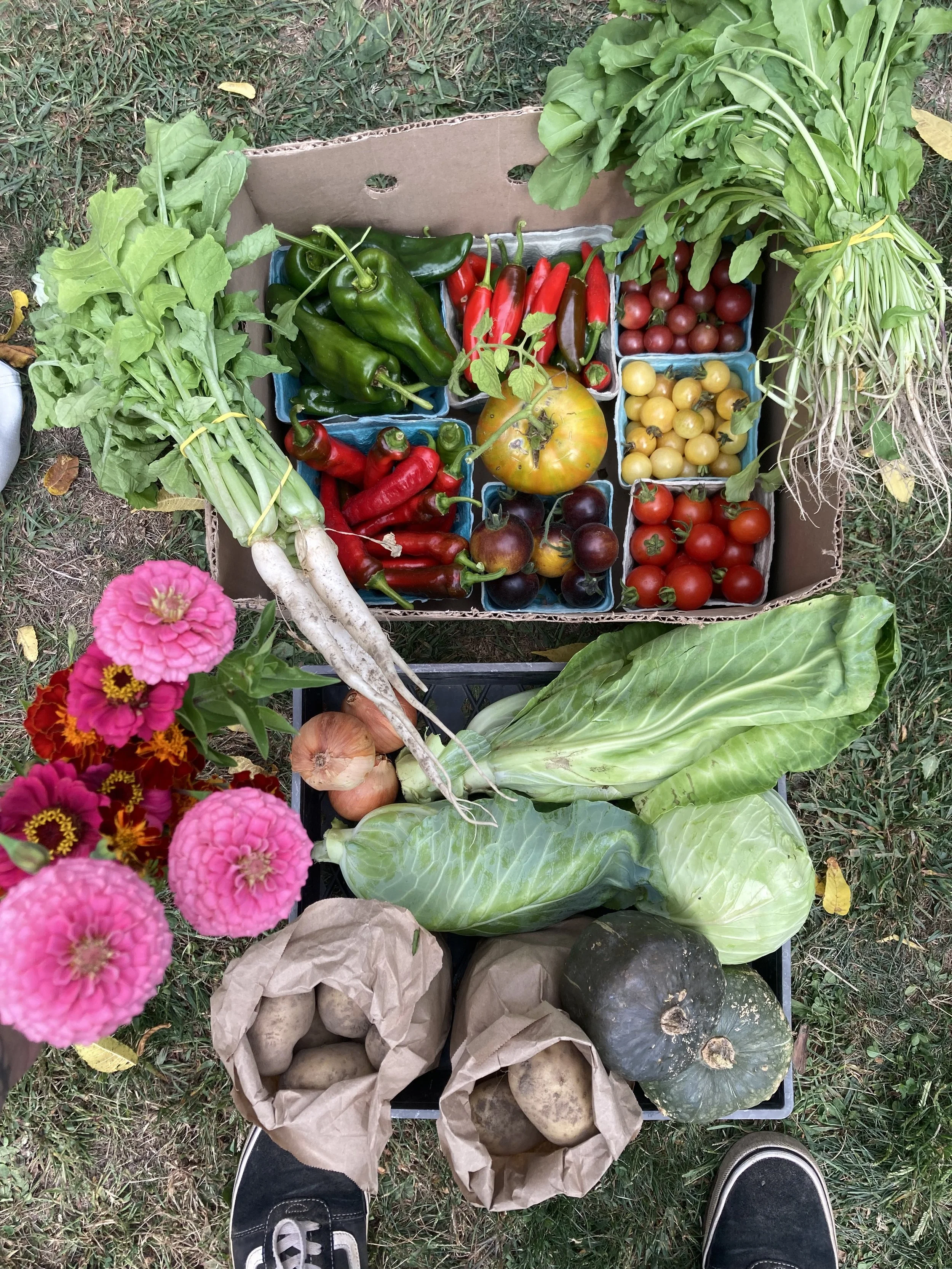
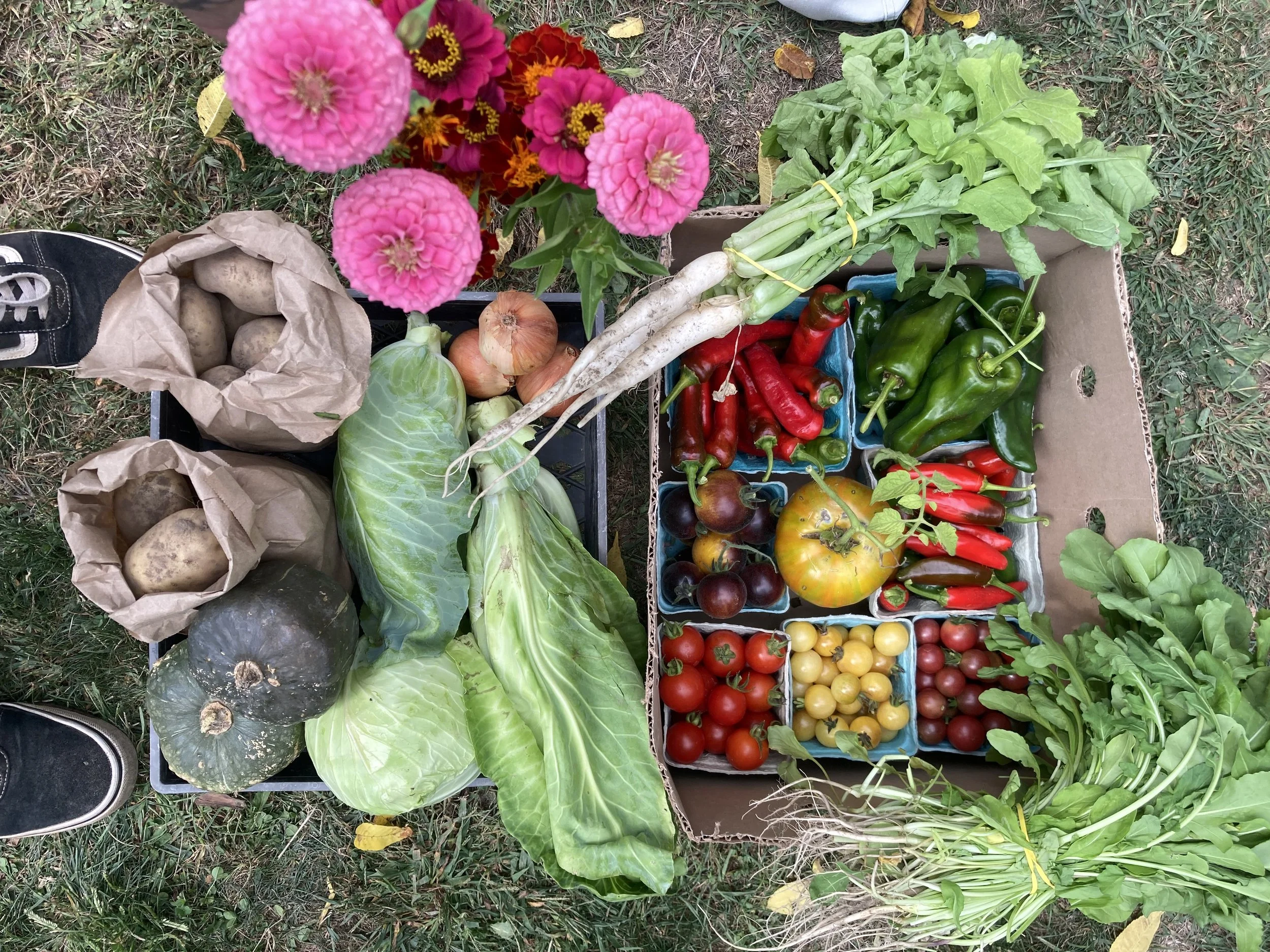
Brennan McCarthy grew up helping his grandfather garden in Newark, NJ. Today he’s a local agripreneur, growing crops and flowers like these on less than an acre.
Agripreneur.
It’s a word you didn’t know you needed to know until you meet someone like End of the Road’s Brennan McCarthy.
But for McCarthy, a 41-year-old Newark, New Jersey transplant (and father of five) growing vegetables with names like Time Bomb Cherry (a pepper), Green Zebr (a tomato), and Yedikule, (a lettuce) on a rented acre on a dead end street in Middleburgh, it fits.
Agripreneur.
McCarthy grew up, the second grandson, helping his grandfather garden in Jersey, and loving every minute of it.
“It never felt like work.”
It instilled in him a different way of valuing–and working for–what you eat: hands-on when you can.
Twenty-some years later, he’s working to decentralize the local food supply, convinced he can generate enough buy-in to turn the Breadbasket of the American Revolution into a hub for young farm entrepreneurs like him.
Agripreneurs.
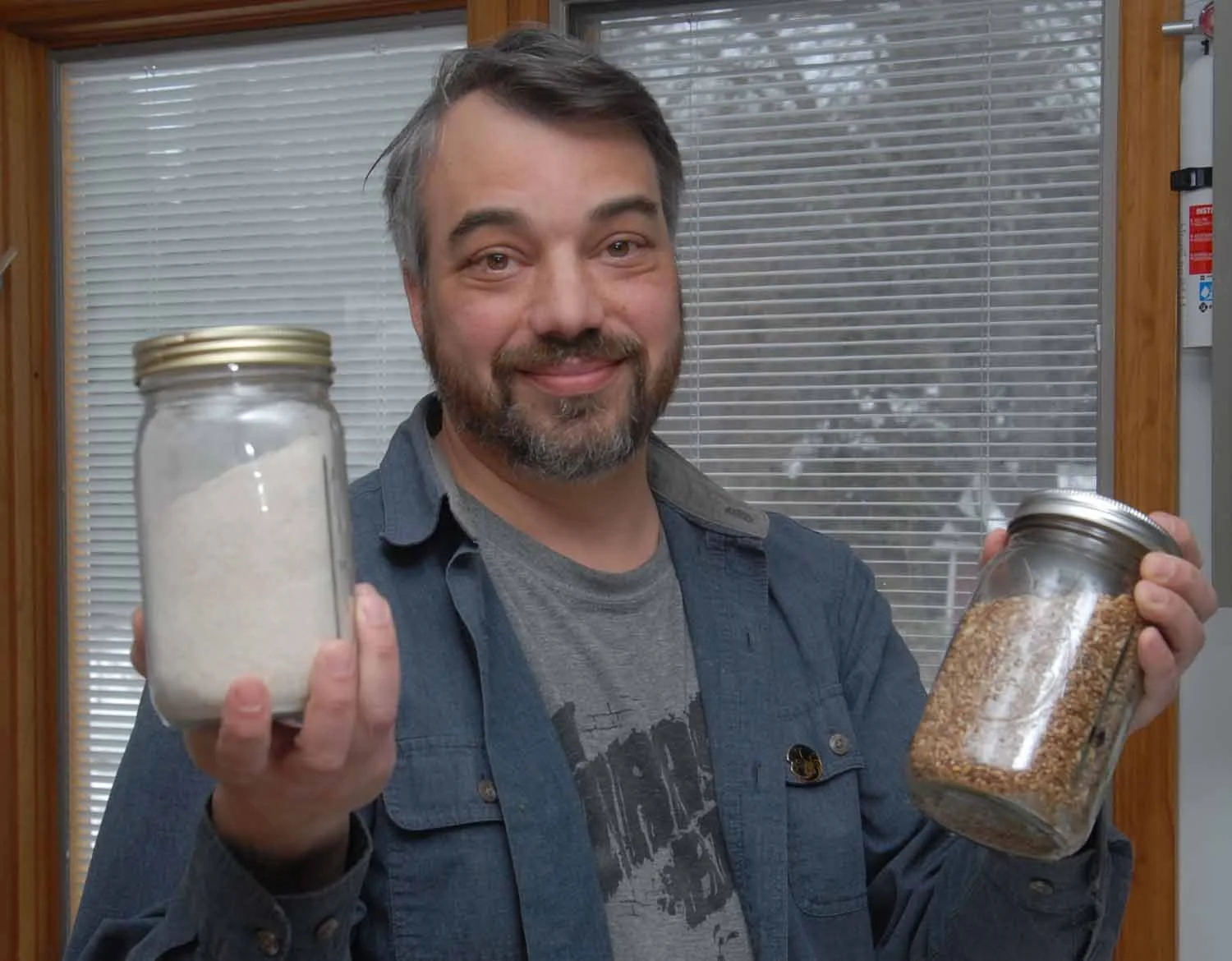
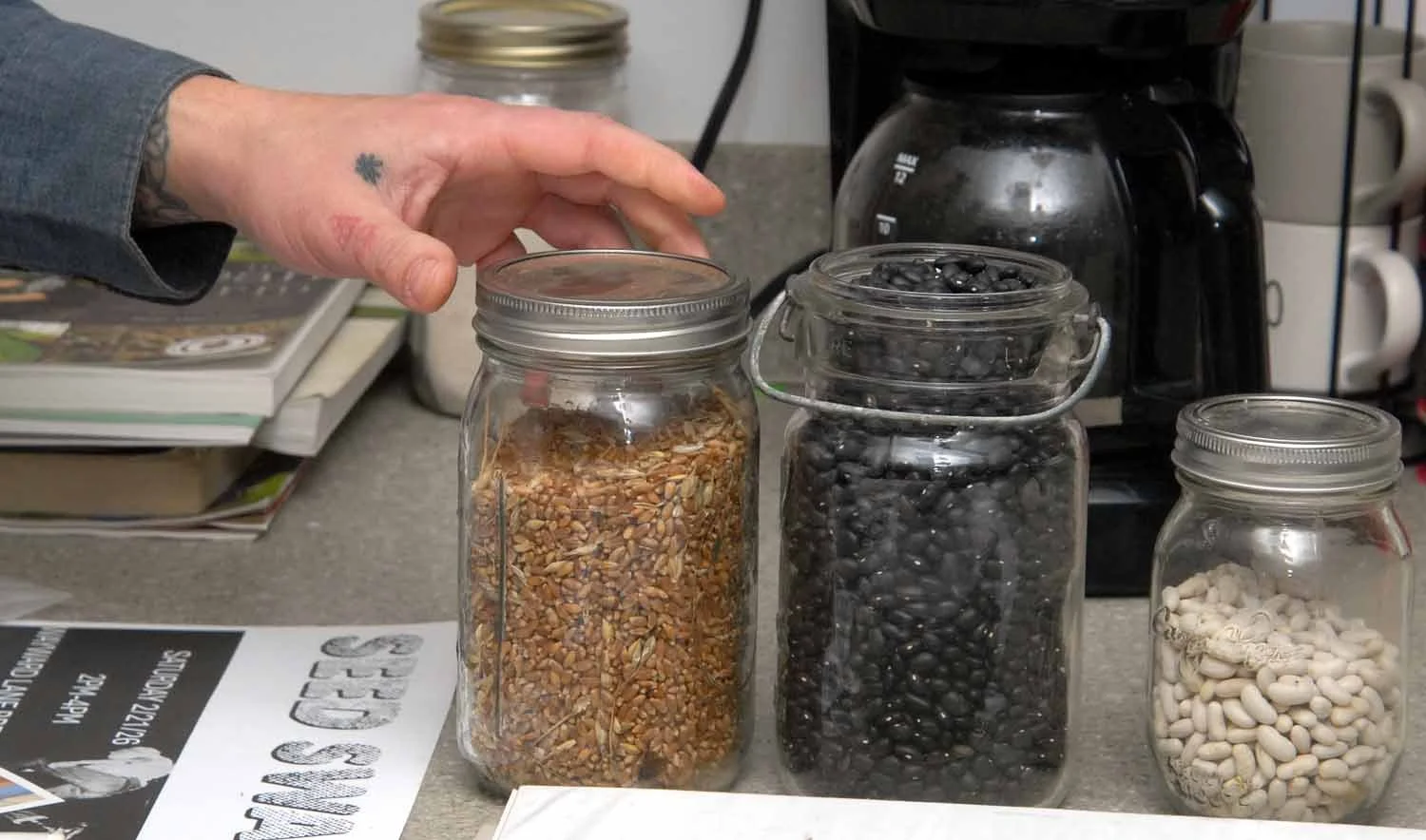
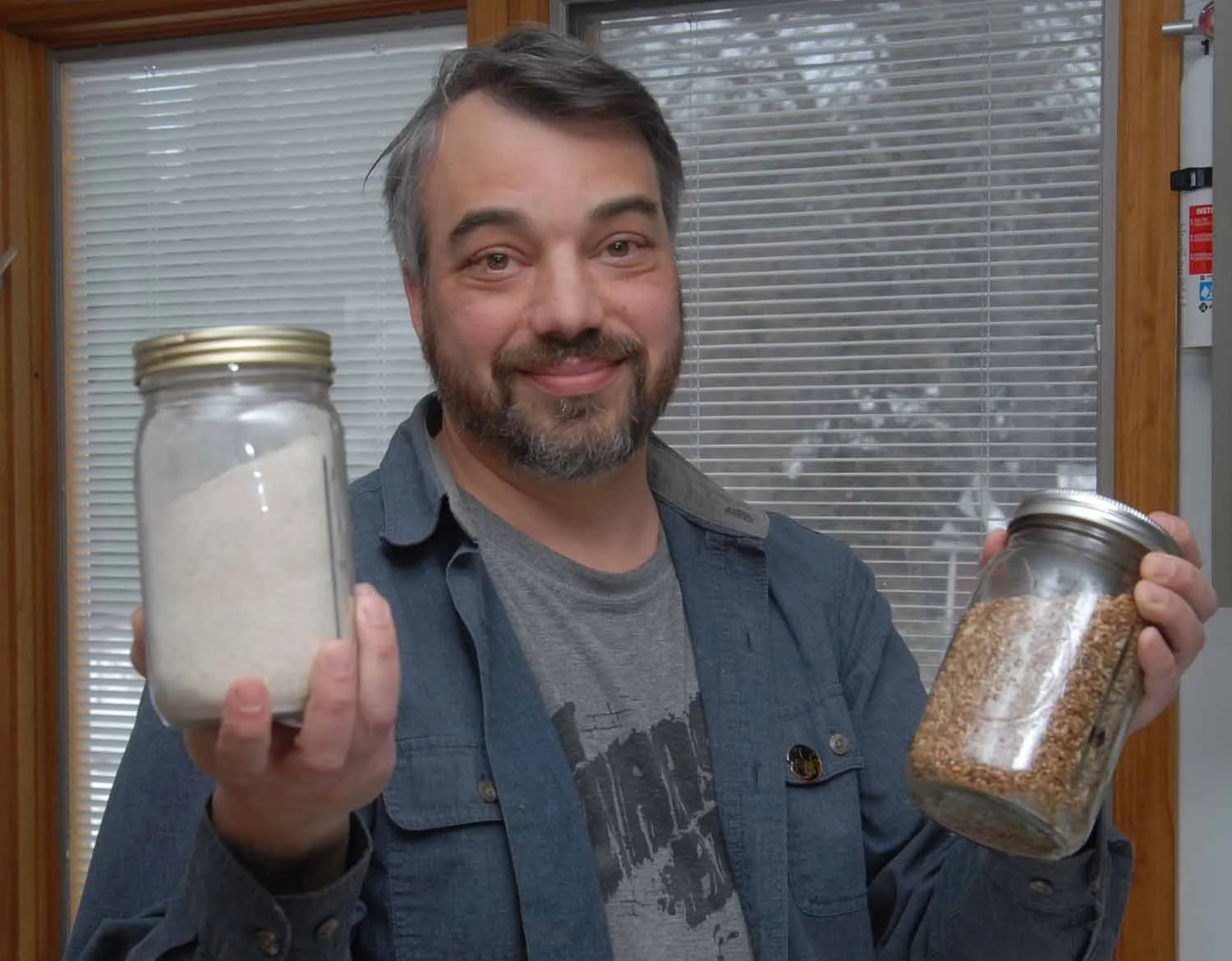
In his Middleburgh kitchen, McCarthy with wheat he grew and ground.
“We have everything we need here. This is an opportunistic land.”
For McCarthy, it’s all about decentralization.
Mostly, the food supply, but his life and mind as well.
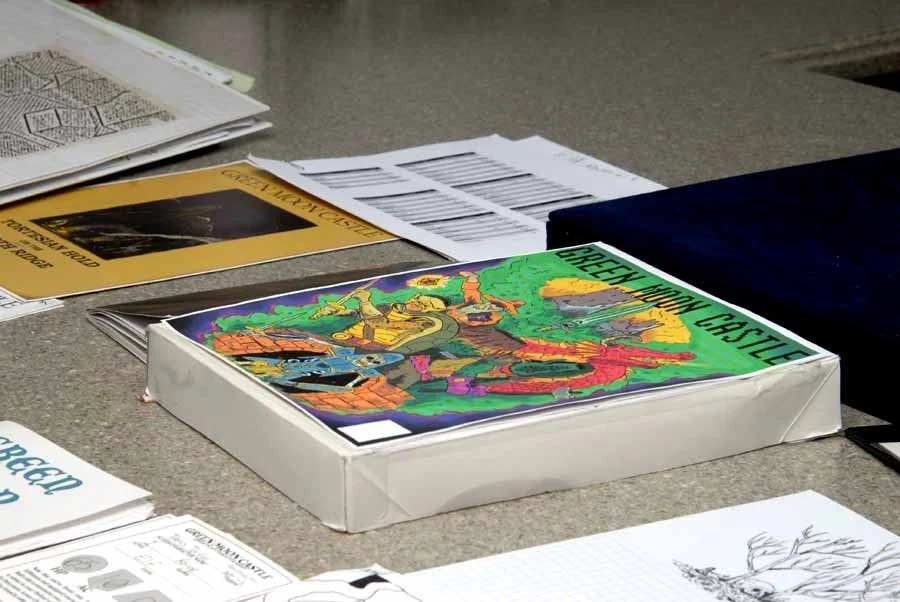
He’s as close to analog as it’s possible to be in 2026 and this time of year, when he’s not charting planting dates and anticipated yields–on paper–the one-time graffiti artist now stay-at-home-dad is inking graphic novels and turning his imagination loose on creating one-of-a-kind fantasy board games at his kitchen table, reluctantly logging in online when he must.
But at heart, he’s always been an agripreneur.
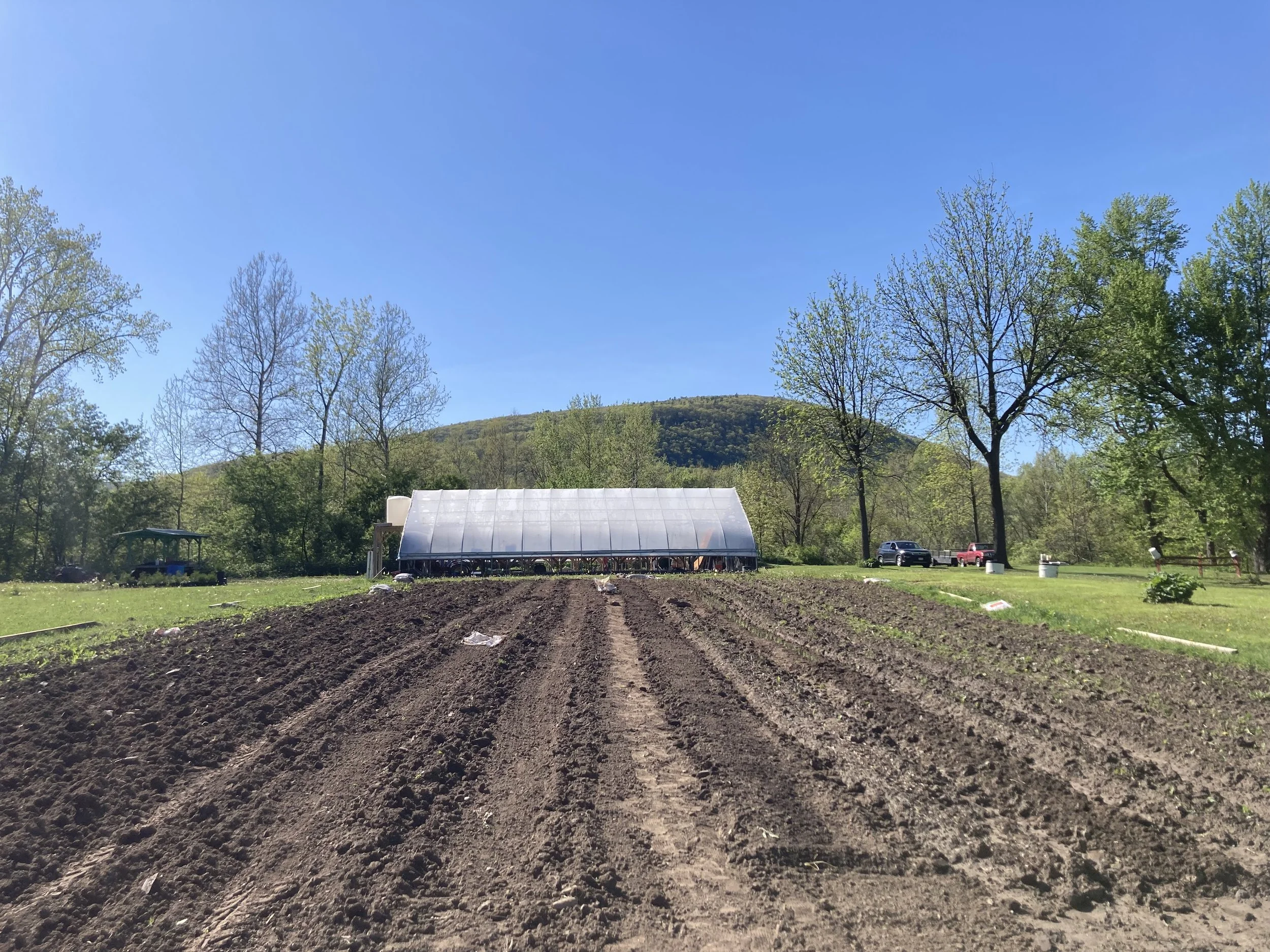
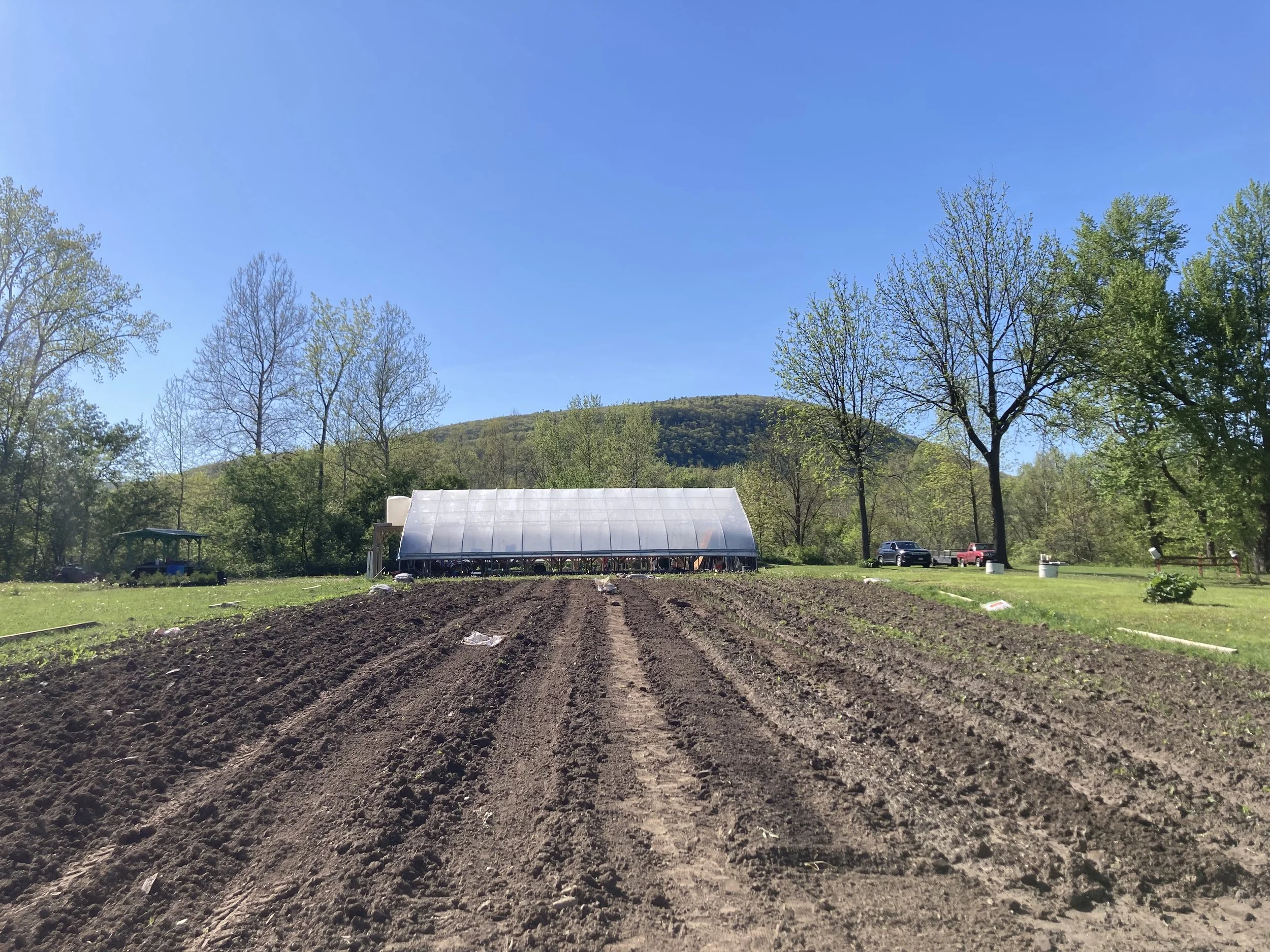
A scene from warmer—and coming soon—times: the Baker Avenue greenhouse End of the Road uses to extend its growing season.
When McCarthy and his wife, Amanda, moved to Middleburgh with their family in 2020--she for a job in Albany–his goal was finding a few acres to grow on, something he’s done all of his life, no matter where or how he lived.
“We’d been on our way up here for years. We knew we needed to get out of New Jersey.”
What he’s created is End of the Road’s Market Garden, dozens of varieties of mostly-vegetables grown organically on a 100-by-55-foot plot at the end of Baker Avenue, their names reading like a chef's shopping list. (He’s been a chef too.)
Peppers: Mammoth hot, Shishito sweet, Yannapeno…
Tomatoes: Speckled Roman, Napa Chardonnay, Black Angel…
Lettuces: Wildfire mix, Salanova premier, May Queen-Gem, Little Gem…
Mustards, turnips, onions, carrots, radishes, cabbages, greens, squash, herbs, beans, one spring wheat–not counting flowers and “weird one-off for-fun stuff.”
On a little more than an acre.
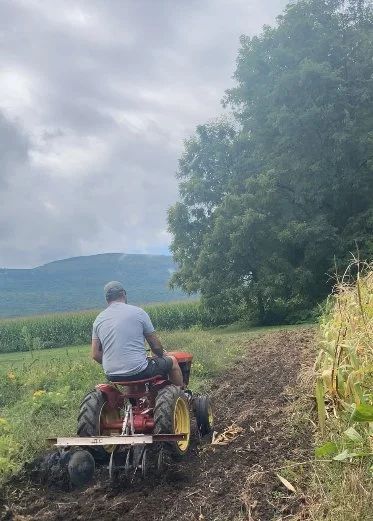
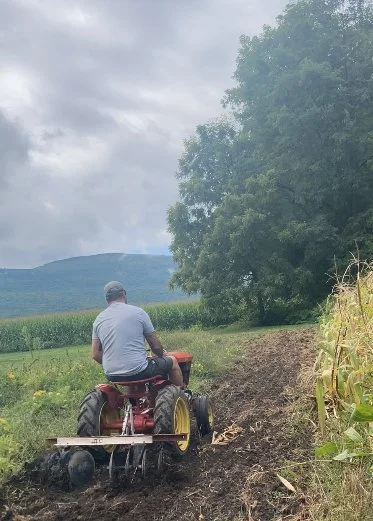
McCarthy discs under a cover crop.
(He’s this close to being able to feed his family off it year-round. “I could probably grow all season with a hoop house and a little heater. I definitely could do it.” Even without that, he was harvesting lettuce from his backyard garden in January.)
McCarthy’s interest in market gardening began in Newark with his grandfather, Henry. When he wasn’t at school or the Boys and Girls Club, he was three houses away, learning how to grow, skills he took with him when, at 26, he helped Morgan’s Farmstand in Cedar Grove, NJ create its first community gardens.
Always, it was always about food. And hard work–though his grandfather made it fun. Never a job, instilling life-lessons that McCarthy relies on today:
You have to do what you have to do before you can do what you want to do.
What you are is more important than what you have.
You weren’t born to be a consumer. Decentralize your mind from that system. Think outside that box.
“Food is so important in an Italian household”. (Don’t let the Irish name confuse you. Grandpa was Italian.) “Growing up, cooking, you had to find the source. You might not have the finances to go and buy what you needed. You might be trading garlic…”

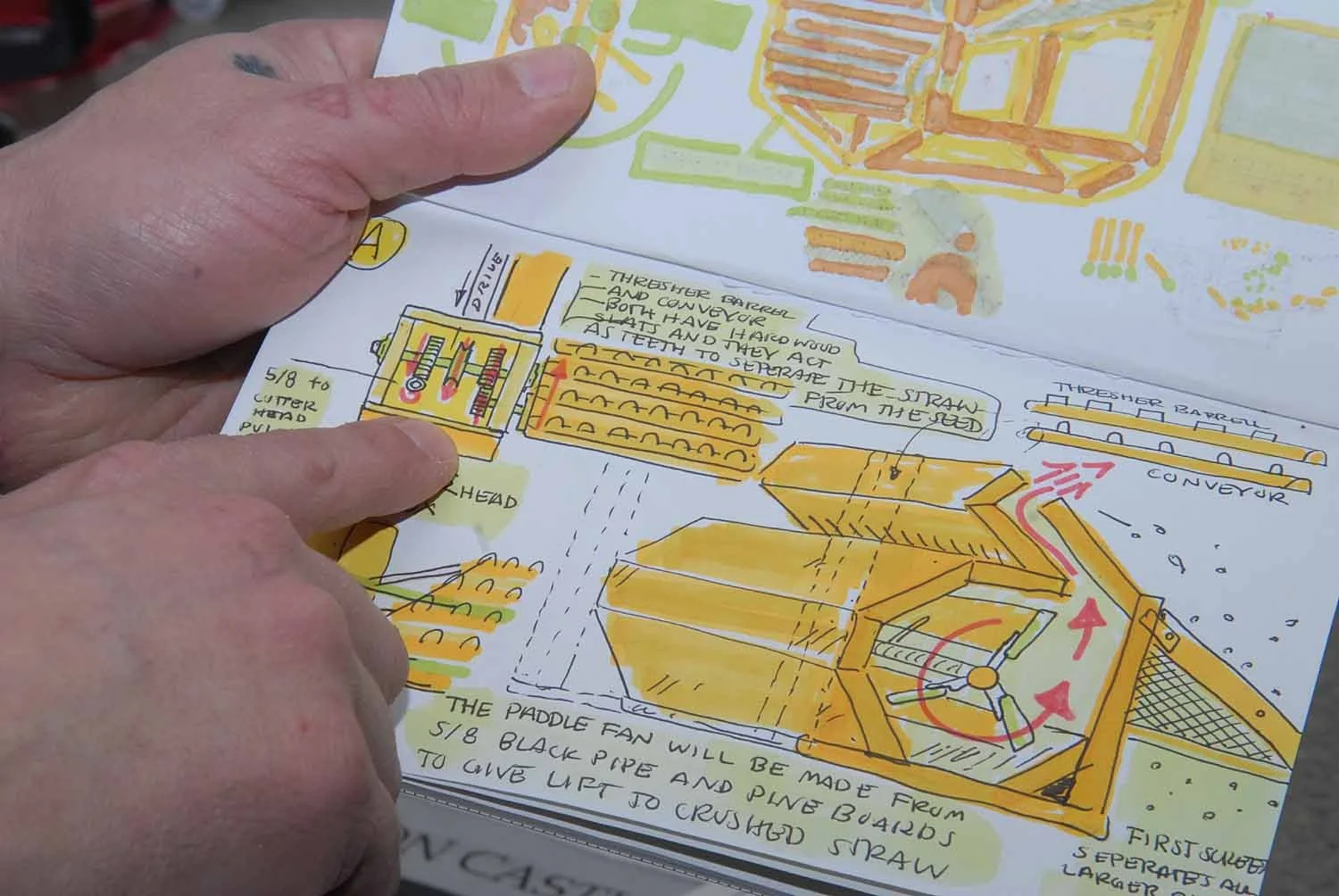
A one-time graffiti artist and always an artist at heart, McCarthy drew and colored this sketch of a thresher.
McCarthy watched as New Jersey’s old mills were turned into lofts and farmland got swallowed up and knew he wanted something different somewhere else.
That somewhere else turned out to be Upstate: His grandfather died when McCarthy was 19, never getting the chance to retire to land he owned in Fultonham. But it was McCarthy’s first look at the Schoharie Valley and even then, he saw its potential.
He spent his first years in Middleburgh prepping the soil as his vision for what he’s calling Restaurant Supported Agriculture–like a CSA but with restaurants–began to germinate. He grew microgreens in rented space for a couple of years and just this January, added a food composting initiative at Wayward Lanes Brewing as a way to help close the loop of food waste–and generate compost–to his agripreneur resume.
“My goal is to help people like me decentralize the food system, maybe with a few acres here, a few acres there, on lost dairy farms, some sort of real-life incubator.” Or even reviving old mills, a life outside consumerism, growing not to make money, but to eat.
“The whole goal is to put yourself in a position to do the things you like” without things like traffic. Something that’s real and lasting.”
Again: Schoharie County.
Where, in February, he helped organize a seed swap, again at Wayward, for “fellow local garden nerds.”
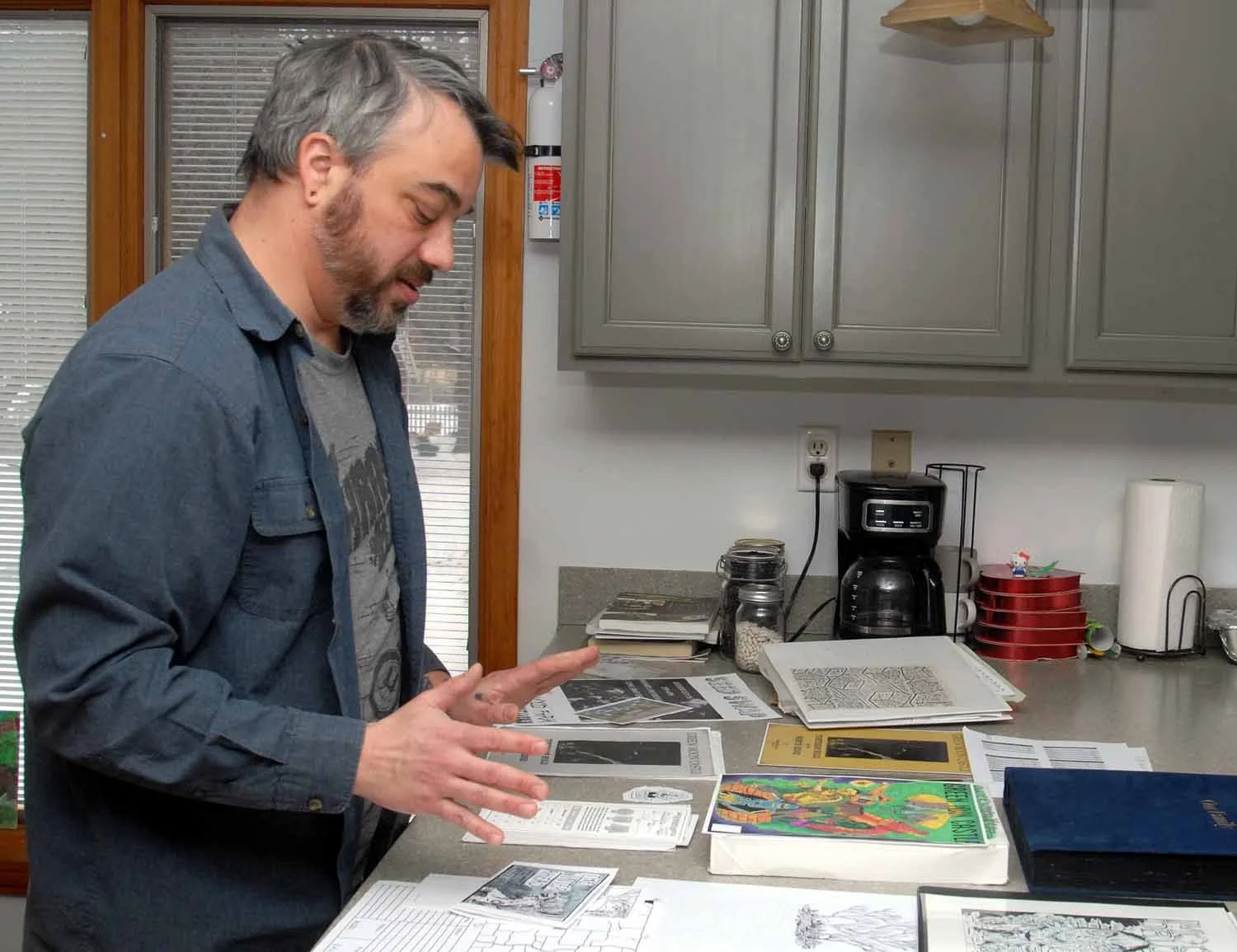
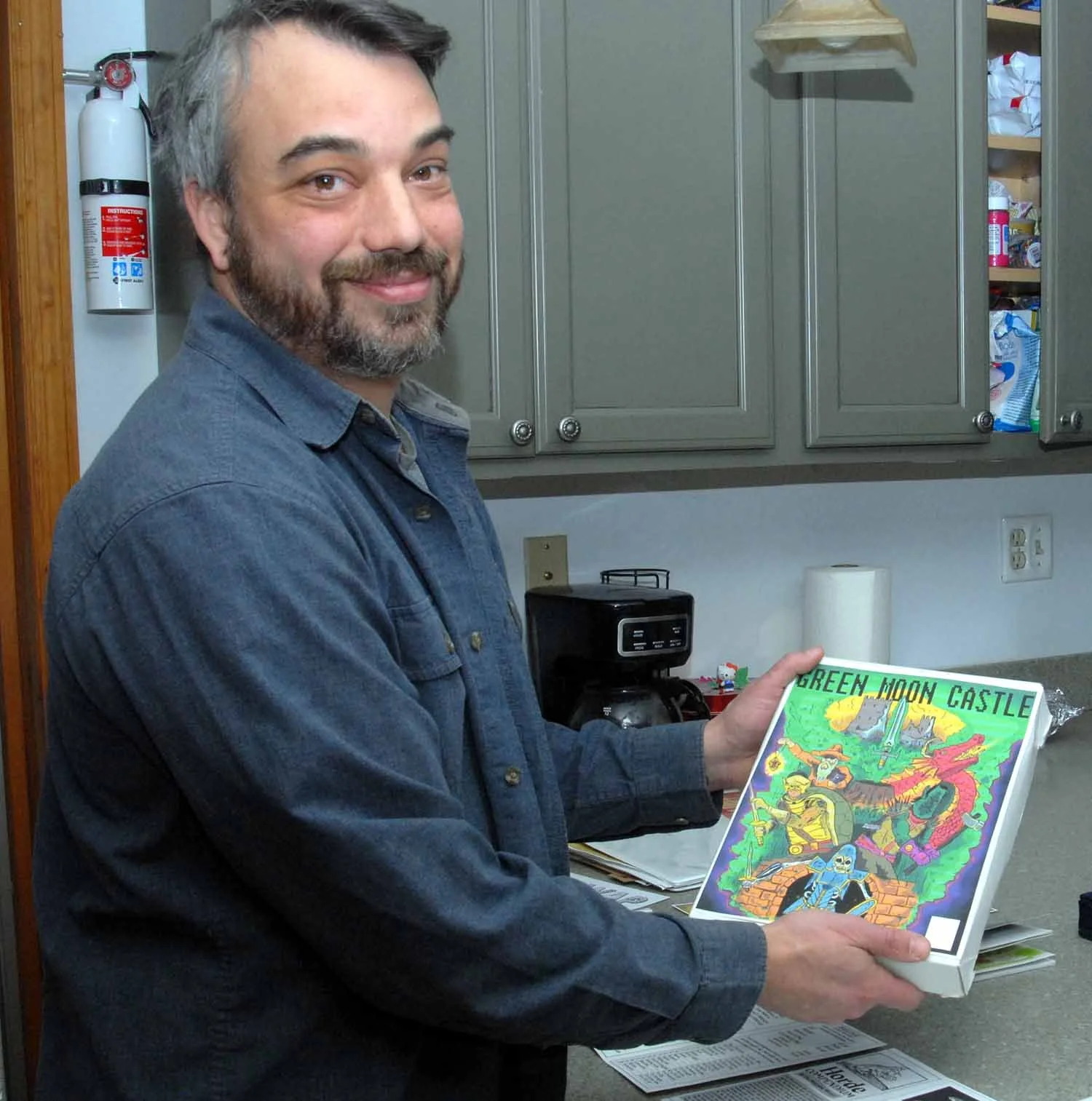
Middleburgh’s Brennan McCarthy is an artist and board game designer as well as an agripreneur.
“I like to come up with things. Create what you don’t have in your life. Manifest your own destiny."
All while counting the days till spring.
Aren’t we all?
You can find McCarthy on Facebook at Endof The Road.
Looking for resources for growing your own business–of any kind? SEEC’s got them at seecny.org/