How Did Schoharie Get Its Name? Upstate NY’s Small Town Timeline of Historic Names
The area now known as the Village of Schoharie was first named by the Mohawk people, who referred to it with a term transliterated as Ska-ahár-ree, commonly interpreted to mean “driftwood” or “floodwaters,” in reference to the Schoharie Creek. When the Palatine German settlers arrived in the early 1700s, they referred to the broader settlement area as the Seven Dörfer or Seven Dorfs, meaning “Seven Villages” or “Seven Farms,” with present-day Schoharie being one of those communities. As the central settlement grew, it became informally known as Fountaintown due to its abundance of natural springs and fresh water sources. By the colonial and Revolutionary War era, the anglicized name Schoharie had become widely used, and the area played a significant role during the conflict, including proximity to the 1777 Battle of the Flockey. Eventually, as the community formalized, it was officially incorporated under its current name, the Village of Schoharie.
Indigenous Era – Mohawk name Ska-ahár-ree (various spellings), meaning “driftwood” or “floodwaters.”
Early 1700s German Settlement – Broader area called Seven Dörfer (“Seven Villages/Farms”).
1700s (pre-Revolutionary War) – Central settlement informally known as Fountaintown, referencing its springs.
Colonial/Revolutionary Era – Name Schoharie used widely; site of the Battle of the Flockey (1777).
19th Century onward – Officially incorporated as the Village of Schoharie.
For more info on how Native Americans shape Upstate NY: Visit the Iroquois Museum or read more about it here.
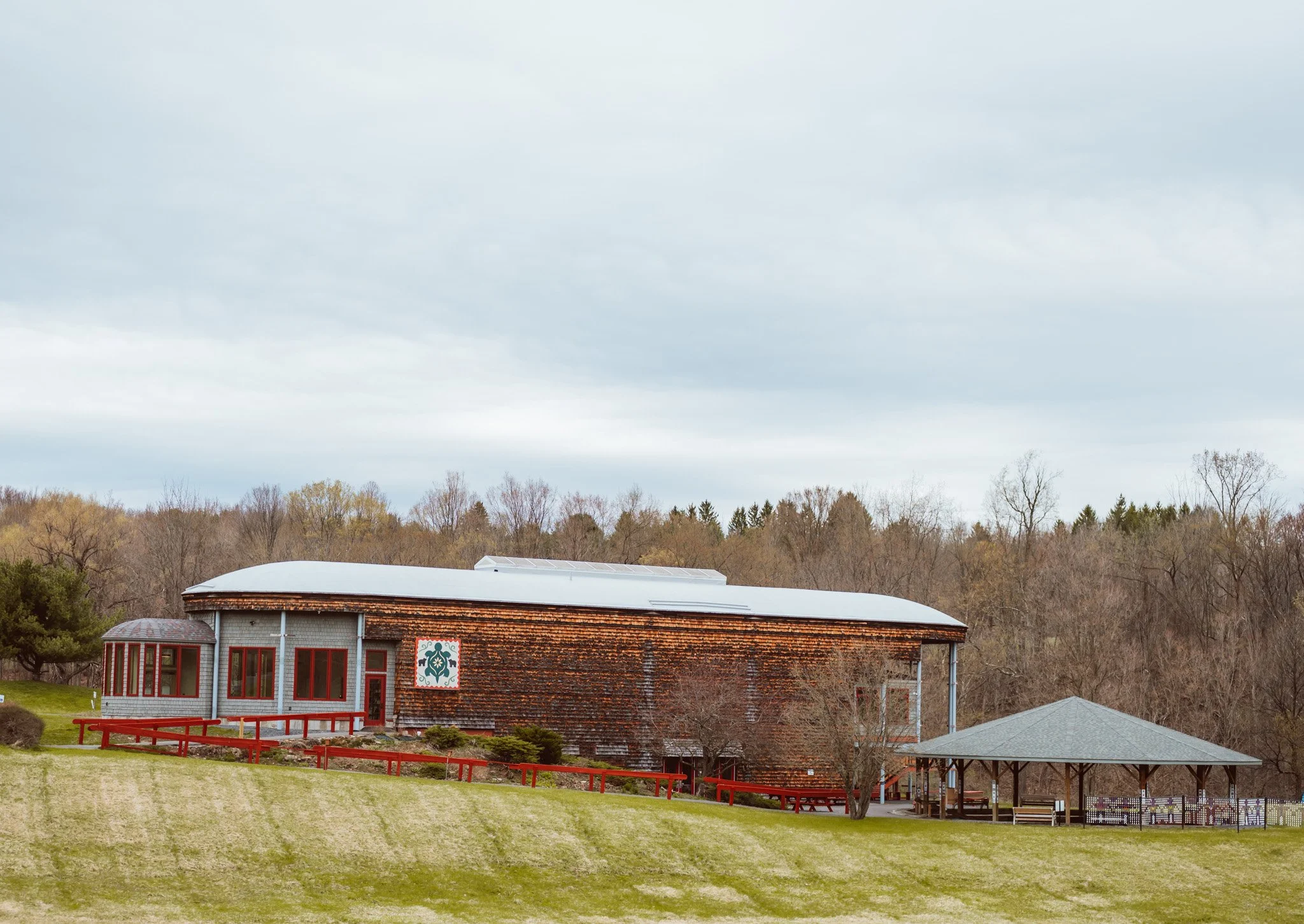
The Iroquios Museum in Howes Cave, NY.
Root Access is your guide to live, work and community. Know any local lore? Comment below!